Memento Mori vs. Mourning Jewelry: Symbols That Set Antique Pieces Apart
- Project
- LEGO & Building Sets
- Drawn by
- Pamela Siegel
- Issued
- Sheet
- A-224
Skulls and coffins point toward memento mori; inscriptions, hair and mourning symbols can help identify Victorian memorial jewelry.
The key to telling memento mori from mourning jewelry is the message a piece was made to carry. Memento mori turns mortality into a visible reminder to make the most of life. Mourning jewelry commemorates a particular person, often through personal details or symbols of grief and remembrance. The two traditions overlap, especially in pieces that incorporate a lock of hair, so a single motif rarely tells the whole story.
Memento mori: a reminder in wearable form
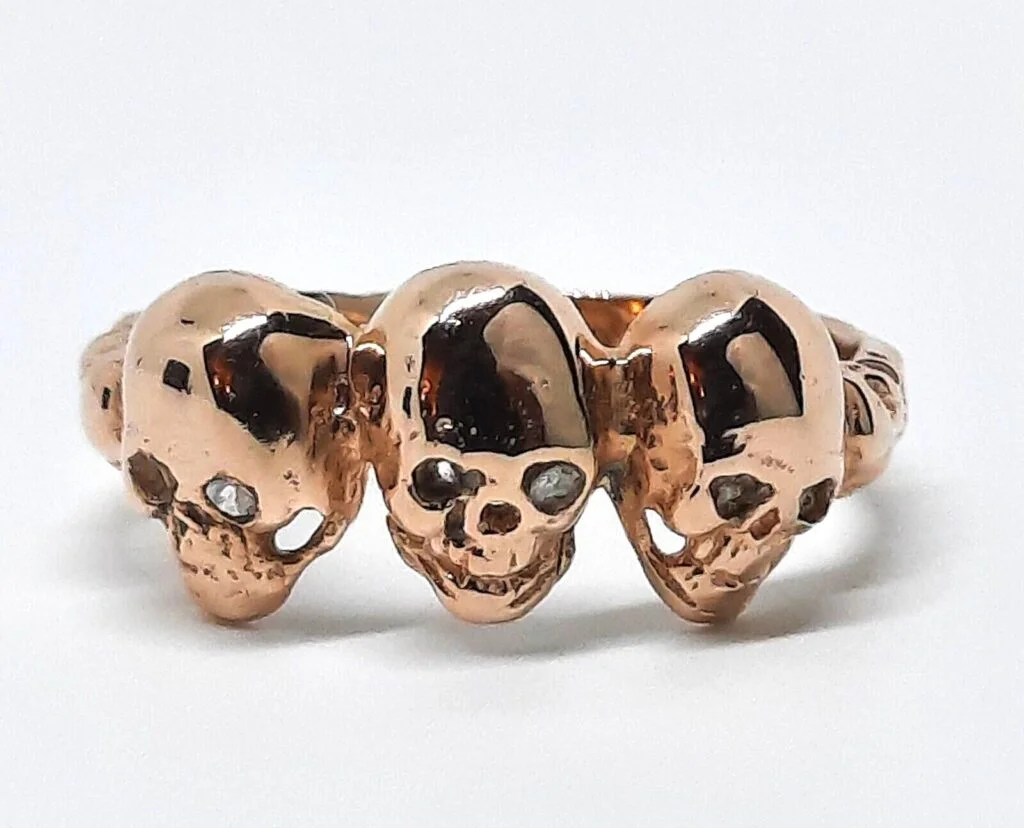
Made by hand from the sixteenth through the eighteenth centuries, memento mori jewelry often wears its subject plainly. Skulls, skeletons and coffins are among its most recognizable designs. The Latin phrase means “remember to die”: these objects pointed to life’s limits and urged the wearer to use each day well. Their appearance can seem macabre now, though the handwork and direct symbolism are part of their appeal.

Rings were common, while pendants and fobs offered other formats. Gold and enamel feature in these pieces, sometimes alongside words inside a band or pendant. Inscriptions could address life and death, remembrance or religious themes. Some pieces were made at the request of a person who had died, with money left in a will to pay for them.
The tradition wasn’t fixed in one form. Some later examples, from the late 1700s and early 1800s, contained a small amount of a deceased person’s hair. The practice became more common from the 1840s onward, bringing some pieces closer in appearance and meaning to mourning jewelry.

For identification, start with the piece’s overall design and any wording, rather than treating a skull as proof on its own. Check for skeletons or coffins, hidden compartments with messages or death imagery, and inscriptions about mortality, remembrance or religious life. Hair and memorial inscriptions can appear in later examples. Modern skull jewelry, including bikers’ rings, shares a motif but doesn’t make it an antique memento mori piece.
Mourning jewelry: signs of personal remembrance
Mourning jewelry was made to honor a departed loved one during a customary period of mourning. As Georgian styles gave way to Victorian ones, the imagery shifted toward symbolic plants and objects such as weeping willows and urns, rather than the skulls and bones associated with memento mori. After Prince Albert died in 1861, Queen Victoria’s example helped shape mourning customs. Black clothing was expected, and jewelry formed part of mourning dress.
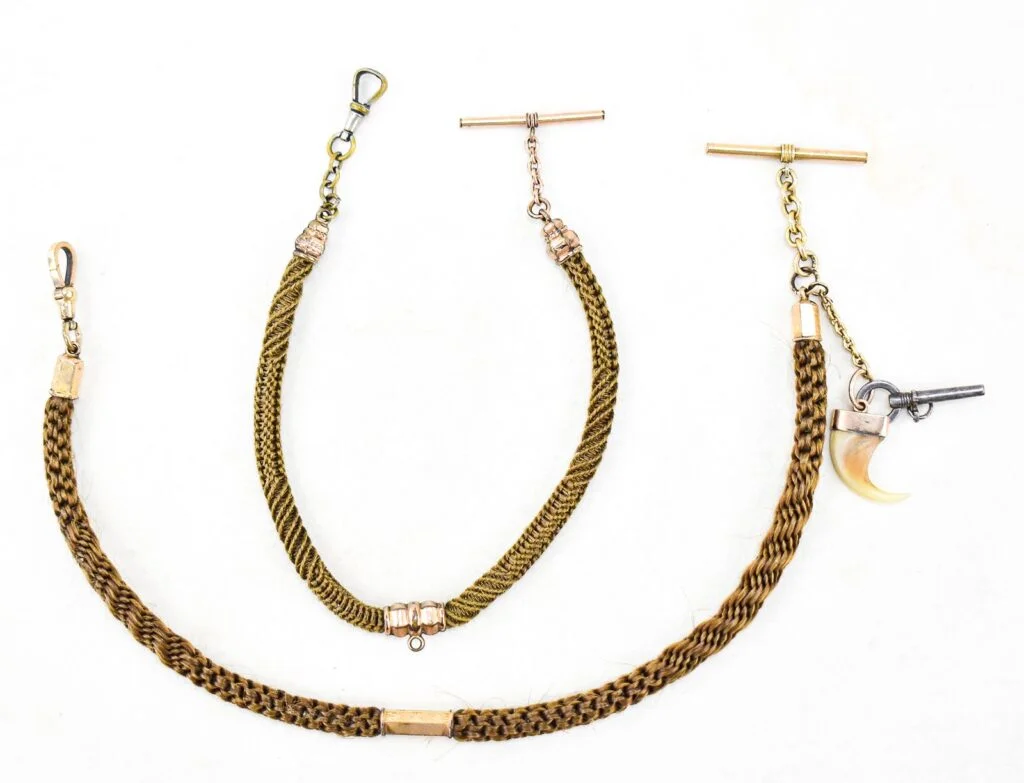
Hair can be meaningful evidence, but it needs context. Locks of hair appeared in memorial jewelry before mourning customs gained greater force. Yet women also wove hair into watch chains and other pieces as gifts for fiancés or husbands. A hairwork object, by itself, doesn’t establish that it was made for mourning.
Color is just as tricky. Whitby jet is naturally black and could be sold as a souvenir; it might suit mourning attire without having been made specifically for that purpose. French jet, a type of black glass, was worn as a fashionable accessory. Black jewelry more broadly became popular in the late nineteenth century, so color alone can’t confirm a mourning use.
Look for a cluster of mourning clues
Memorial inscriptions are among the clearest signs. General wording such as “in memory of” may be worked into the design, while some pieces name the departed or record a death date. A photograph can add a more personal link to the person being remembered.

Other clues rely on symbolism. Forget-me-not flowers can appear with seed pearls representing tears. Doves suggest peace; swallows, faithfulness. Crosses and anchors point to faith and hope, while lilies of the valley also appear among mourning motifs. Black materials such as jet and bog oak, hair from the deceased, and memorial photos may support the identification when they appear alongside these signs.

When black material or hair appears without inscriptions, symbolic decoration or other memorial details, the intended use may be impossible to establish. It could have been worn during mourning, but that doesn’t prove it was made for that purpose. A cluster of clues makes a stronger case than any one feature.
Where the traditions meet
Memento mori and mourning jewelry overlap most visibly in early nineteenth-century pieces that combine mortality themes with personal memorial elements. Across the period, the style moved from smaller, macabre designs toward more dramatic and sentimental forms. Both kinds can be difficult to find, and sought-after examples may be expensive. Patient comparison can help collectors build a focused group at a range of price points.
When assessing an uncertain piece, record its materials, construction, inscriptions and motifs, then compare it with documented examples. The WorthPoint Price Guide offers comparable items and reported sale information: WorthPoint Price Guide. The strongest identification comes from reading the object as a whole, with its symbols and personal details considered together.
Pamela Siegel is a freelance writer and author who has been educating collectors for more than two decades. In addition to three books on antiques and collectibles, she frequently shares her expertise through online writing and articles for print publications. Pamela is also the co-founder of Costume Jewelry Collectors Int’l (CJCI) and the proprietor of Chic Antiques by Pamela.
WorthPoint—Discover. Value. Preserve.
The post Memento Mori or Mourning Jewelry? How to Tell the Difference in Antique Jewelry appeared first on WorthPoint.
| Rev | Description | Date |
|---|---|---|
| A | Issued for reading | |
| B | Viewed 443 times | Current |