Lumibricks Alpine Observatory L9091 Review: 2,437 Pieces, Lights and a Working Projector
- Project
- Toys & Action Figures
- Drawn by
- [email protected] (Unknown)
- Issued
- Sheet
- A-106
Lumibricks L9091 pairs a four-level mountain observatory with 13 lighting elements and a telescope projector. The build impresses, though projection has limits.

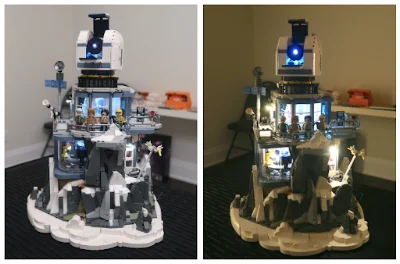
The Lumibricks Alpine Observatory L9091 stands out for combining a detailed, four-level mountain build with an included lighting kit and a telescope that projects images. Its 2,437 pieces create a snowy base, research spaces and a rotating dome, while 51 printed parts keep the finished structure free of stickers. In hands-on building, the strongest features are the illuminated interiors and the convincing mountain setting; the projector is an appealing extra, but its dim output and awkward image changes keep it from matching the rest of the set.
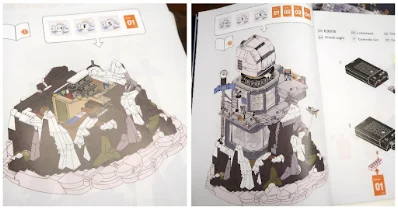
The design takes inspiration from the real-life Sphinx Observatory on Jungfraujoch in Switzerland. It can also read as a remote research outpost on another world, a fitting alternative for collectors who want to mix the structure with space-themed figures and accessories.

Set details and first impressions
L9091 is rated for ages 16+ and includes four Lumibricks-style minifigures. There are no stickers: the set instead supplies 51 printed parts, including graphic panels and small interior details. The lighting kit contains 13 elements, among them LED points and strips, panels and the projector light.
The listed retail prices are 195.99 CAD in Canada, 129.99 GBP in Europe and 173.99 USD in the USA. The set was supplied for this review. Lumibricks sets are also available through Amazon, according to the source.

Unboxing and the lighting system
Parts arrive in numbered bags, with the lighting components packed separately. The sturdy box includes detailed product information, including its manufacture date, and the build is supported by two substantial instruction manuals. Bags are numbered 1 through 14 and grouped to match the relevant building steps, which makes it easier to keep a large project organized.

The kit includes two battery boxes, a screwdriver for their covers and tweezers for handling wires and small components. The main lighting box needs three 1.5V AA batteries; the projector’s separate box takes two 3V CR2032 coin cells. Other components include USB plugs, wireless connectors, expansion boards, LED strips and panels. One bag contains the projector lens and four image disks; a further disk is already supplied with the lens, making five in total.
Wiring is built into the model rather than left hanging across the rooms. Special bricks allow cables to run through the structure, helping the finished interiors look neat. That system is a real asset, though builders should take care when seating the connectors between floors.
Fourteen steps from rock base to dome
The build has 14 steps across two manuals: the first covers steps 1–6, and the second covers steps 7–14. The original builder spent about an hour per step while stopping to photograph details, completing the project over four days of intermittent work. The instructions were described as easy to follow.


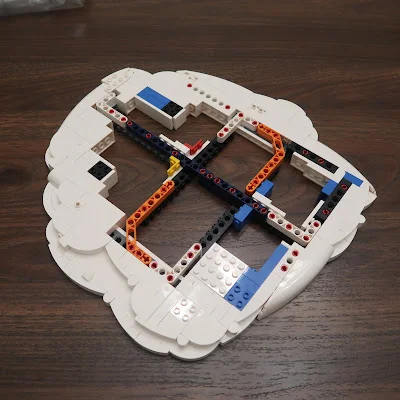
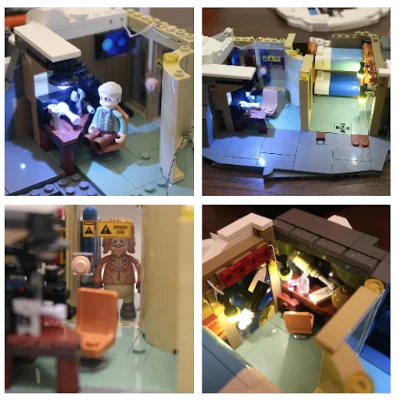
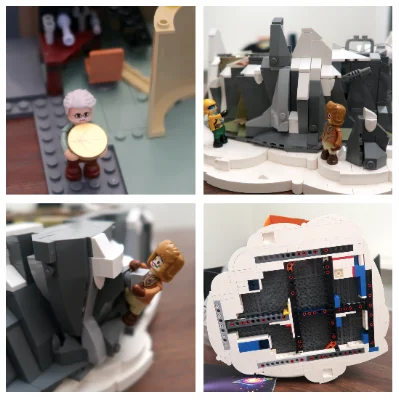
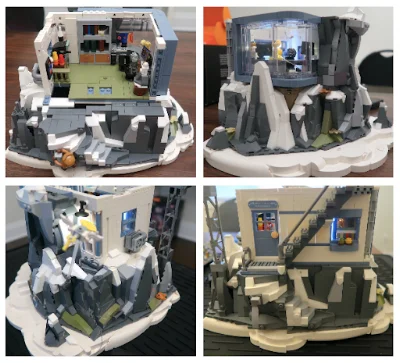
Steps 1–2 establish a firm foundation from Technic-style bricks arranged in a criss-cross pattern. Curved white pieces mounted on their sides suggest snow across the rocky terrain. Steps 3–6 build out the mountain base, which attaches to that sturdy frame. Inside are personnel quarters with two bunk beds and workspaces, each with its own lighting effect. Printed details include a replica of the Golden Record sent on the Voyager missions, while snow-covered rock shapes give the exterior much of its character.
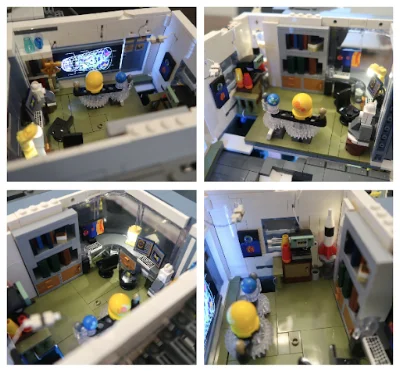
Steps 7–9 add the research lab above the quarters. Its furnishings include a science library, computer workstation, coffee maker and solar-system model. A lit display depicting the Big Bang provides one of the standout interior effects. Builders should route the wires carefully through the walls and make sure the wireless connectors meet between levels. The rear swing-out panel takes some force to attach.
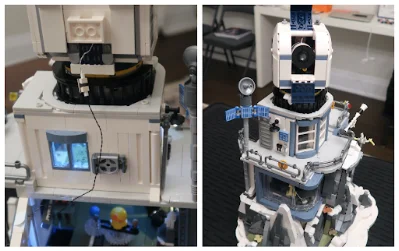

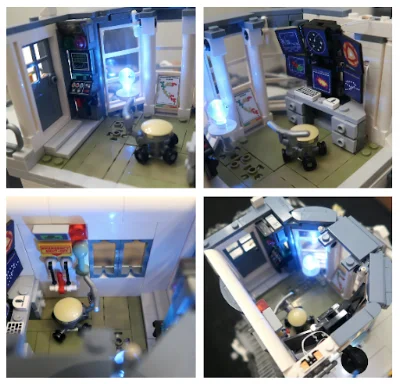
The monitoring station occupies the next level, built during steps 10–11. Banks of scientific and electrical equipment sit beside printed space-themed panels, with a broad viewing platform around the outside. As with the research floor, the connections between levels need a little attention; the reviewer adjusted the section to ensure the wireless connectors made contact.
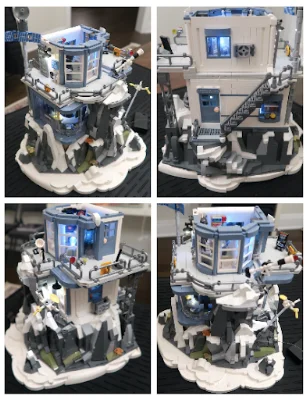
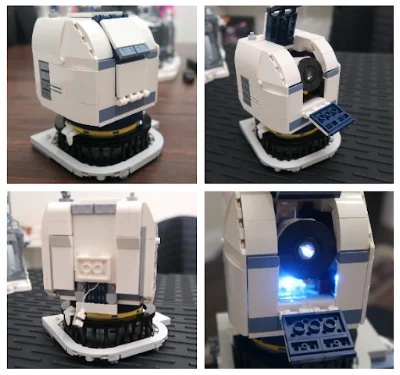
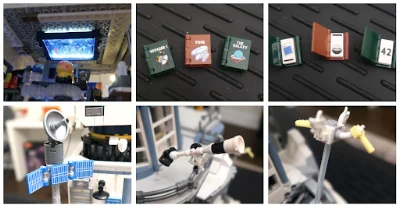
Steps 12–14 finish the rotating telescope dome and its surrounding details. The dome turns freely, and its doors open by hand. The finishing touches include an illuminated ceiling panel, an outdoor antenna array, an astrophotography camera, a bird and books with a reference to The Hitchhiker’s Guide to the Galaxy.
Projector performance and final verdict
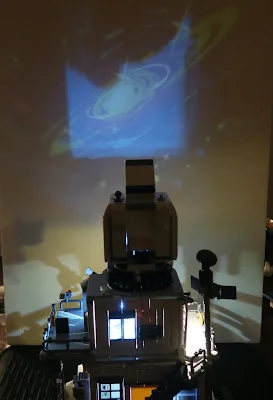
The telescope projector is the set’s most unusual feature, but it’s also the part with the clearest limitations. Its LED output is not especially strong: the reviewer found the image satisfactory at close range but dim at greater distance. For a clearer result, a white board was placed about 12 inches from the model. A dark patch appeared above the projected image, and its cause wasn’t identified.
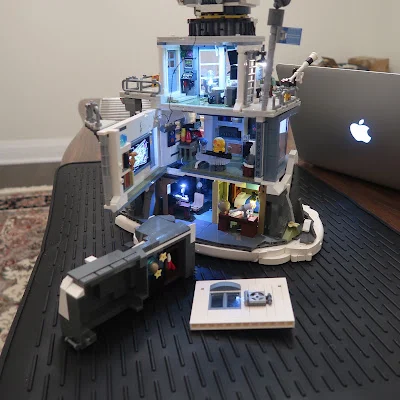
Changing image disks is less convenient than the concept suggests, since accessing them involves taking apart the front of the telescope. The reviewer left the disks in place rather than dismantling the section to try the alternatives. The supplied projector battery box needs CR2032 cells; without spares, the reviewer instead connected the dome to the main power source using a 15 cm extension cable and a four-port expansion board, replacing the second-floor wire joiner. Those two additional components came from Lightailing.com.
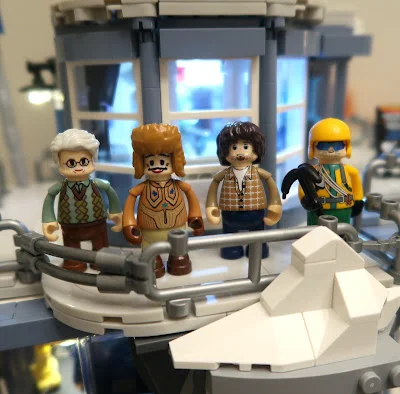
The reviewer’s verdict is an enthusiastic 4.8 out of 5. The lighting, jagged terrain, printed details and well-dressed rooms make L9091 a compelling display model, while the opening rear doors and panels add hands-on play value. The projector feels like a feature Lumibricks could refine: it works best up close, and swapping disks asks for more effort than it should. Still, the combination of mountain setting and observatory detail gives builders plenty to enjoy, whether they keep it in the Alps or imagine it on a distant planet.
| Rev | Description | Date |
|---|---|---|
| A | Issued for reading | |
| B | Viewed 414 times | Current |