EzGrader Measures Stamp Centering for More Consistent Grading
- Project
- Stamps & Postal History
- Drawn by
- SoftPro 2010 Inc.
- Issued
- Sheet
- A-14
EzGrader analyzes stamp margins from a scan, helping collectors compare centering and document results with an eGrade certificate.
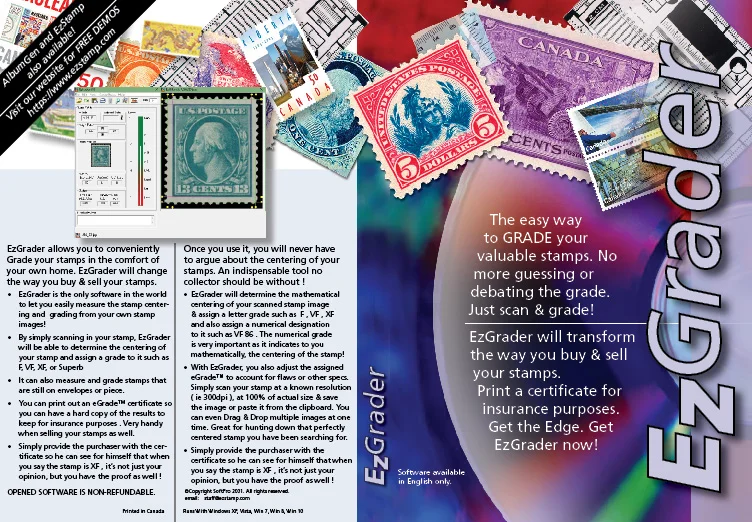
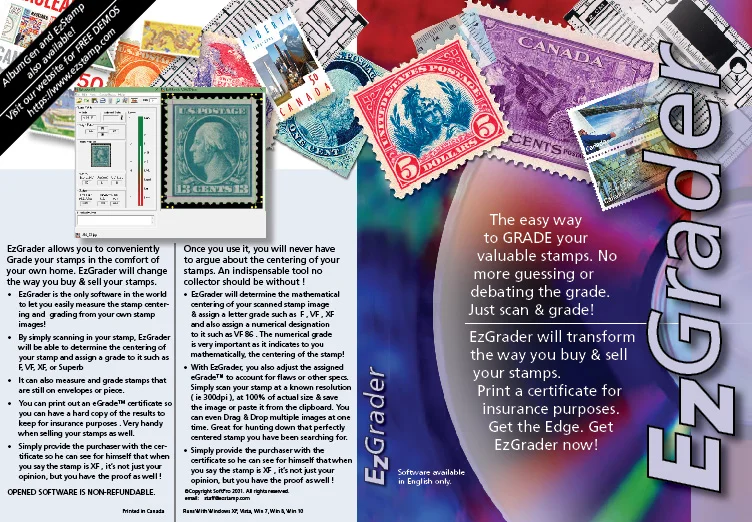
Centering can be difficult to judge consistently from a stamp image, especially when buyers and sellers are working from different photos or descriptions. EzGrader is stamp grading software that measures a stamp’s margins mathematically and uses those measurements to help assign familiar grades such as F, VF and XF. Its practical value lies in giving collectors a repeatable reference for one part of a stamp’s condition.
The software’s results concern centering; they don’t, on the information provided, describe every feature that affects a stamp’s overall condition. Collectors still need to consider the item itself and the quality of the available images when assessing a purchase or preparing a listing.
What the measurement adds
Centering describes the position of a stamp’s design within its margins. A stamp may look attractive at a glance, yet closer comparison can show that the design sits unevenly. The source describes centering as a factor in collector interest and value, while also making clear that visual judgments can differ from person to person.
EzGrader aims to make that comparison more consistent. Rather than relying only on an impression formed from a photograph, a user can scan a stamp against a black background and review the software’s measurements. The program displays a numerical result and can help translate the measurement into grades such as F, VF and XF. That gives buyers and sellers a common reference point to discuss centering, though the result should be understood as the software’s assessment rather than a complete account of the stamp.
Reading the scan and grade display
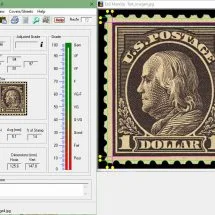
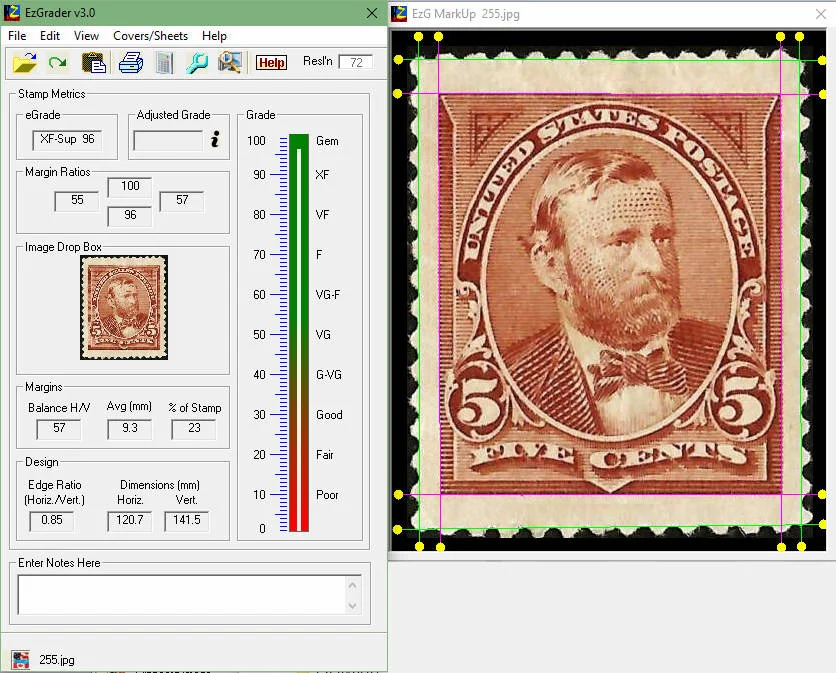
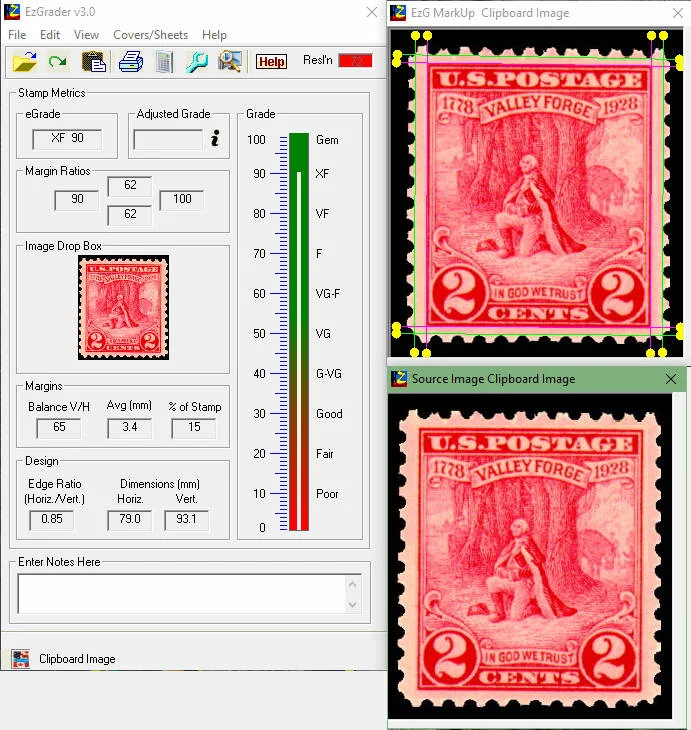
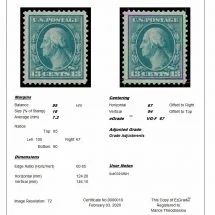
The supplied examples show marked measurement guides alongside stamp scans. One screenshot identifies an eGrade of XF-Sup 96 and margin ratios beside a US 5 cent stamp. Another shows a Stamp Metrics panel reading eGrade XF 90 beside a 2¢ Valley Forge stamp. These examples illustrate how the interface presents a grade with visual guides, so users can see which margins the measurements refer to.
An eGrade certificate can also be printed for documentation. For collectors who track their holdings, or sellers who want to show how they evaluated centering, keeping the certificate with the stamp’s records can make the measurement easier to revisit. A certificate records the software’s result; it doesn’t replace careful inspection of the stamp or establish other aspects of condition.
Where collectors may find it useful
Online listings often ask collectors to judge an item through photographs, and image quality can make fine comparisons harder. EzGrader offers a way to compare centering across stamps that can be scanned, including examples being considered for purchase. The source says collectors use it when looking at online offerings and auctions, where a consistent measurement may help them decide which stamps merit closer attention.
For buyers, a measured result can add detail to a comparison between examples. It may help flag a stamp whose centering appears weaker than expected from the listing image. Sellers can include centering information alongside photographs, giving prospective buyers a clearer account of what the seller measured. Collectors building a collection can use the same process repeatedly as a reference when assessing new additions.
That said, a numerical grade shouldn’t be read in isolation. A scan and its measurement are most useful when the stamp is positioned clearly and the relevant margins are visible. The images supplied with the article show guides over scans, but do not provide instructions for scan settings, handling, or interpreting every possible result. Collectors should refer to the software’s own guidance for those details.
How users describe the software
Testimonials included with the product information focus on auction comparisons and confidence in evaluating centering. Donald La Mar of MidAmerica Gift Certificate Company describes the score as a way to assess centering without emotion or pride of ownership affecting the calculation. Robert M. of the USA says he has used EZ Grader for over 8 years and finds it helpful when reviewing stamp auctions.
Those are individual user accounts, not independent measurements of the software’s performance. They do, however, point to the use case the product emphasizes: making comparisons more consistent when collectors are deciding which examples to examine or pursue.
A centering reference for buying, selling and collecting
EzGrader measures centering from a scan, presents numerical results and helps connect those results to familiar grade labels. It can also produce an eGrade certificate. For collectors, the combination offers a documented way to discuss margins; for sellers, it can add a specific centering reference to a listing.
More information and a demo are available through the linked EzGrader page. The useful takeaway is straightforward: treat the measurement as a focused tool for comparing centering, then consider it alongside the stamp and the evidence available in the listing or in hand.
| Rev | Description | Date |
|---|---|---|
| A | Issued for reading | |
| B | Viewed 338 times | Current |