Stamp Centering, Grading and the Limits of EzGrader
- Project
- Stamps & Postal History
- Drawn by
- SoftPro 2010 Inc.
- Issued
- Sheet
- A-16
EzGrader measures stamp centering, while defects and authentication still require expert review. Examples show why the distinction matters to buyers and sellers.
Centering gives collectors a measurable starting point
Stamp grading combines measurements with judgments, and that distinction matters when a price guide assigns very different values to different grades. EzGrader’s eGrade addresses one specific part of that picture: centering. The software’s creator says its first version was released on Jan. 11, 2000, originally for personal use after repeated purchases of stamps described as VF or XF that did not appear to meet those grades.
In the creator’s account, centering can be calculated from an image, while descriptions such as “Bright Color” and “Sharp Impression” require judgment. Tears, thins and perforation faults can also affect a stamp’s condition, but EzGrader does not assess them. Its eGrade reports centering alone; it is not a complete condition grade or an authentication result. That boundary is useful when comparing its output with a third party’s grade: the two may be addressing different features.
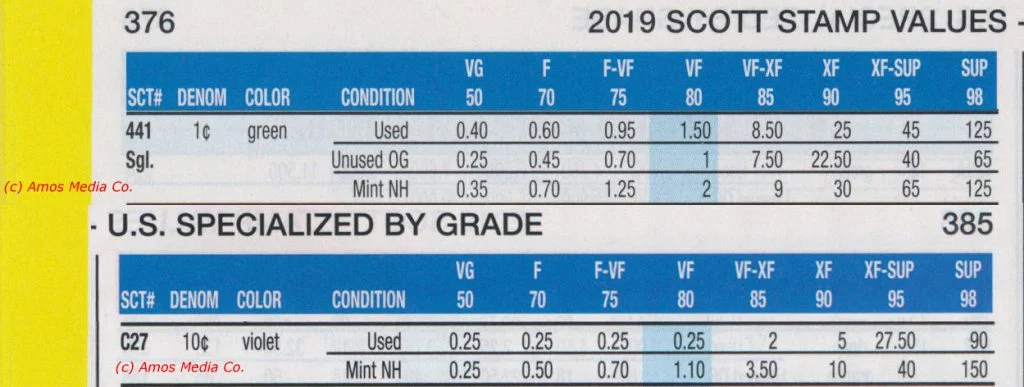
The article cites the Extended Price guide for US Stamps in the US Specialized catalog from Amos Media/Scott. Its 2019 table lists selected stamps across eight grades, from VF-50 to Superb-98. For Sc#441, the cited price rises from $0.35 for MNH-VG-50 to $125 for MNH-SUP-98. For Sc#C27, it moves from $0.25 for MNH-VG-50 to $150 for MNH-SUP-98. These are catalog figures quoted in the source, not sale results.
Those spreads explain why centering can be an important detail when assessing a listing. The source’s author says that, over more than 15 years of searching, they found only two copies of #441 grading 98 or higher and one copy of C27 grading 98. The author also cautions that the naked eye can struggle to distinguish grades such as 90, 95 and 98. Uneven perforation tips may make margins look wider than they are, adding another reason to measure rather than rely on appearance alone.
Five #441 examples show how measurements can diverge
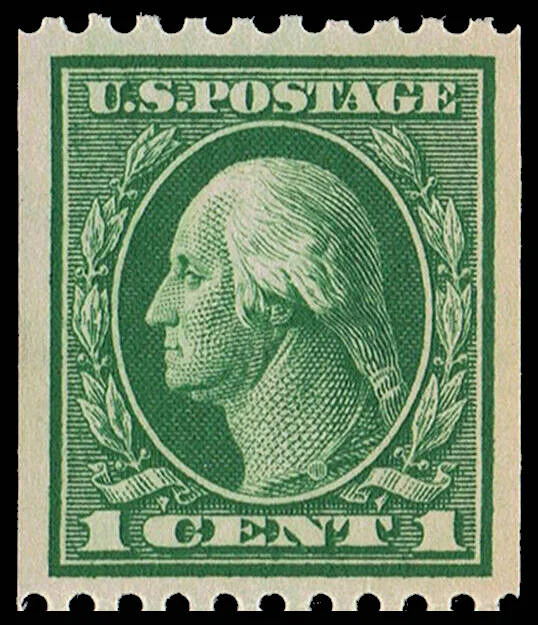
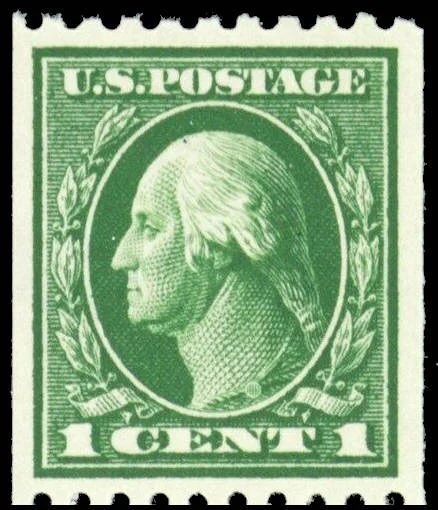
The article compares five copies of Sc#441. Their third party grades and eGrades do not line up neatly, a reminder that a centering score should be read as one data point, with the stated grading basis in view.
 Copy 1 |
 Copy 2 |
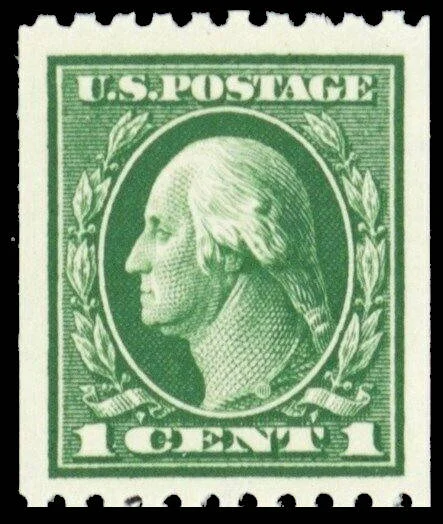 Copy 3 |
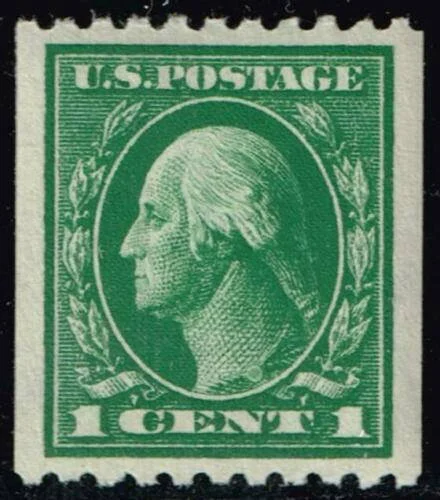 Copy 4 |
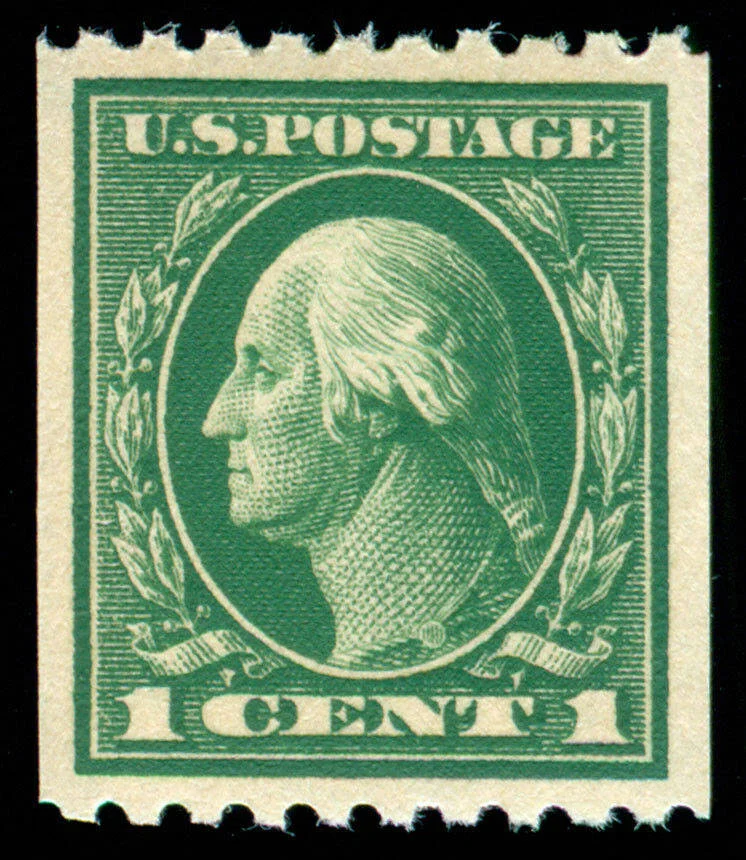 Copy 5 |
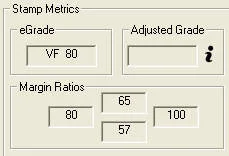
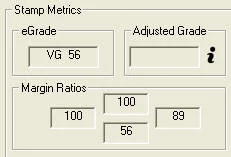
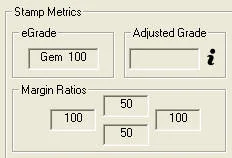
The displayed results are Copy #1 at eGrade F-75, with a third party grade of XF-90; Copy #2 at VF-80, with XF; Copy #3 at VG-56, with XF-95; Copy #4 at GEM-100, with no third party grade shown; and Copy #5 at VF-XF-81, with XF-SUP.
Copy #1
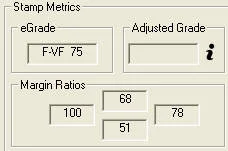
Copy #2
Copy #3
Copy #4
Copy #5
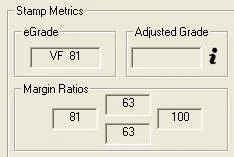
The margin ratios shown with each result offer a way to inspect how the score was reached. The comparison supports a practical reading: an eGrade can help flag a difference in centering even when a third party’s grade is higher. It cannot explain that difference by itself, since the other grade may reflect additional condition factors.
C27 examples and the role of expert review
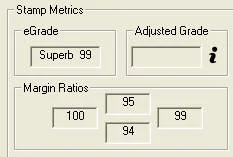
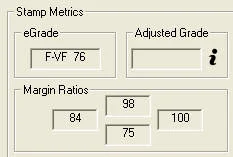
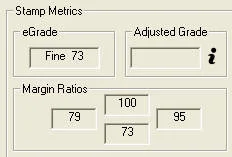
A second comparison covers three copies of Sc#C27, the 10¢ violet air mail stamp. The results range from eGrade SUP-99 for Copy #1, with no third party grade shown, to VF-76 for Copy #2 and F-73 for Copy #3. The latter two carry third party grades of XF-GEM.
 Copy 1 |
 Copy 2 |
 Copy 3 |
Copy #1
Copy #2
Copy #3
Measuring centering may also help collectors decide which stamps warrant the cost and wait associated with third party grading. The source puts those fees at roughly $10 to $40, or as much as 6% of catalog value, and says the process can take up to two months. Its author scans stamps and uses eGrade as an initial guide, suggesting a stamp with eGrade VG-65 may be a lower priority than one at XF-98.
Authentication remains a separate job. The author points to classic stamps as candidates for expert review because they may have been regummed, reperforated or otherwise altered. EzGrader does not authenticate stamps, detect forgeries or identify alterations; the source credits experts and third party organizations with that work. A centering certificate can document the software’s measurement, but it cannot replace an expert opinion on a stamp’s identity or condition.
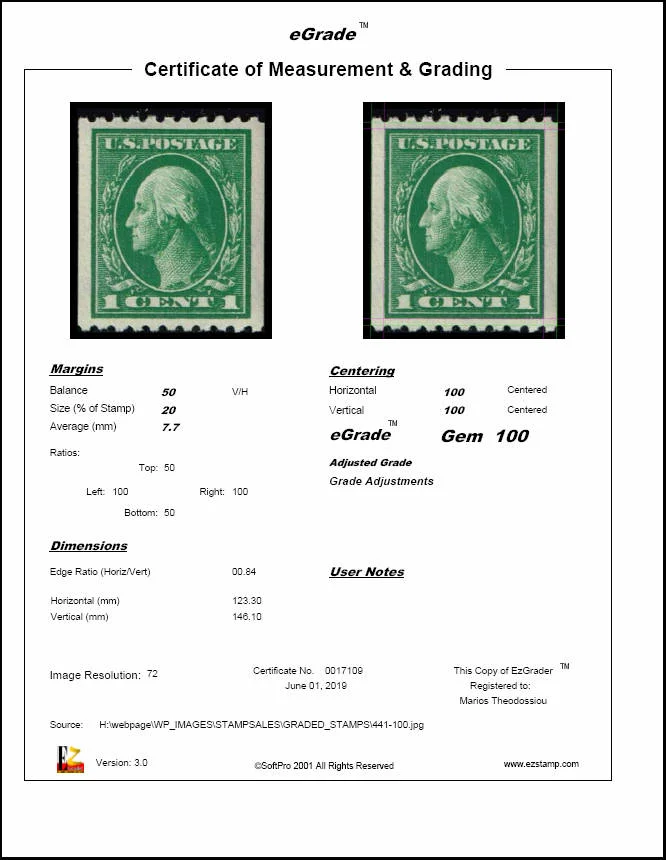
For buyers and sellers, the useful takeaway is to ask what a grade actually measures. EzGrader’s certificate and margin data can make a centering claim easier to inspect and substantiate, while condition faults and authenticity still call for separate judgment. The source says the pictured Sc#441 and C27 stamps were offered for sale; it gives no sale date or result.
The original post appeared at EzStamp’s article on stamp grading and centering and links to EzStamp.
| Rev | Description | Date |
|---|---|---|
| A | Issued for reading | |
| B | Viewed 649 times | Current |