1990 Calbee Baseball Cards: Four Series, Two Sizes and a Tougher Fourth Series
- Project
- LEGO & Building Sets
- Drawn by
- [email protected] (Unknown)
- Issued
- Sheet
- A-168
A new lot fills out the second and third series of 1990 Calbee cards, a set distinguished by mixed card sizes and a harder-to-find fourth series.

A Calbee set defined by changing formats
The 1990 Calbee set stands out before you even get to the player pictures: its cards don’t all share the same dimensions. Issued in four series, it starts with small cards and shifts to a larger format from series 2 onward. That change gives the set a physical rhythm, and it becomes part of the collecting experience rather than a detail you notice only while sorting. In an album, the shift in scale is visible across the page.
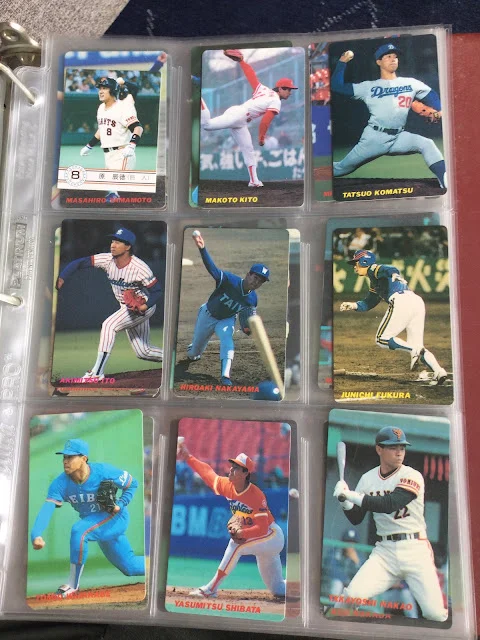

The first series is mini-sized, roughly comparable to 1950 Bowman cards for American collectors. Cards in series 2, 3 and 4 are larger, though still a little smaller than standard trading cards. The 1980 Calbee set shares this unusual mix of sizes, as Nippon Baseball Retro has also pointed out in its discussion of that set. For collectors, format is more than a footnote: it affects how cards sit beside one another, what sleeves or album pockets suit them, and how the transition between series reads when the collection is laid out. That physical difference also gives you a quick way to distinguish the early run from the later portions when handling a mixed group.
A useful addition to an incomplete run
The recent addition here was a lot of 1990 cards from series 2 and 3. The collector had already completed series 1 a few years earlier, but had very few cards from the later runs. The lot offered a practical way to fill that gap: it contains more than half of the cards in those two series. The purchase doesn’t complete the set, but it changes the project from a largely empty stretch into a substantial start on the missing portions.

Putting the new cards into the album with the previously collected first series makes the size shift easy to see. Cards #55 and #56 sit next to each other at the top of the page, providing a direct comparison between the two formats. It’s a small detail, but one that gives the set a visual character beyond its subjects and card numbering. Album placement makes that difference easier to register than a checklist alone can: the format becomes part of the set’s structure. Collectors arranging mixed-size issues may find that the page itself helps tell the story of how a set was issued.
If you’re working in this space, a lot like this is useful for more than its card count. It can show how much of a series remains, reveal whether the cards fit an existing album plan, and bring details into view that are easy to miss when examples are examined one at a time.
Related design, separate identity
The design has a close resemblance to the better-known 1991 Calbee set, which includes Hideo Nomo’s rookie card. The 1990 cards are therefore an interesting neighboring issue for collectors who already know the later set, while the varying dimensions give them a separate identity. The visual relationship may help explain why the two years are easy to connect at a glance, but it shouldn’t obscure what distinguishes the 1990 issue. Its size change across the series is a feature worth checking when sorting cards or planning an album layout.
An open question on the card backs
There’s also an unresolved variation on the card backs. Some have solid black horizontal lines along the top and bottom; others lack those lines. Cards #85 and #86 illustrate the difference, though the reason for it isn’t known. For now, the observation is a useful collecting note rather than an explanation: it gives collectors a detail to compare as additional examples turn up. The numbers alone don’t establish whether the difference reflects a printing change, a production choice, or some other cause.
When examining cards, it may help to record the card number and back design together, so the distinction can be checked across more copies. (And this is the part most people overlook.) A variation is easier to assess when it’s documented consistently, with the front and back considered as a pair rather than as isolated curiosities. A question mark, for now.

The comparison between the two backs is shown here:


Series 4 sets the harder task
Series 2 and 3 are described as manageable to track down, while series 4 is the tougher part of the project. Most of its cards have gold borders, a design discussed in an earlier look at 1980s gold-bordered Calbees. The fourth series is harder to find and somewhat more expensive than the other cards, so collectors building the set may want to keep it in mind as a distinct challenge. That difference matters when setting expectations: progress through the middle series may not indicate how quickly the final section will come together.

What the set offers as it comes together
With the new lot added to an album that already holds series 1, the 1990 Calbee set has moved onto the collector’s active list. The next useful steps are clear: continue filling series 2 and 3, watch for the gold-bordered fourth series, and keep comparing the back variations on #85 and #86. The numbers here are underwhelming as a completion story, since the lot leaves plenty to find, but the material already gives the collector several distinct threads to follow.
This is more significant than it looks. The changing sizes affect how the cards are displayed, the gold borders give the final series a recognizable visual identity, and the unexplained backs leave a small research question open. Taken together, these details make the set rewarding to study as well as to complete. And yet, the reason for the back variation remains unknown; further comparisons may clarify whether it appears consistently across copies, but the present evidence supports only careful observation.
| Rev | Description | Date |
|---|---|---|
| A | Issued for reading | |
| B | Viewed 813 times | Current |