Poison Ivy Doll Poppy and an Unidentified Vintage Barbie Dress
- Project
- Toys & Action Figures
- Drawn by
- [email protected] (Tam)
- Issued
- Sheet
- A-52
Treesa’s custom Poison Ivy doll pairs a Super Hero Girls figure with a Crayola fashion pack. A tagged vintage Barbie dress still needs an identification.

A custom Poison Ivy becomes Poppy
A doll with a clear custom identity and a vintage Barbie dress with an unanswered identification make a lively pair of collector puzzles. Treesa’s gift brings together a Super Hero Girls Poison Ivy doll and a Crayola Pixie Doodles fashion pack; the dress, meanwhile, is recognized by its fabric but hasn’t yet been identified by name. One story is about the choices that make a doll personal. The other is about how far a material clue can take an identification.
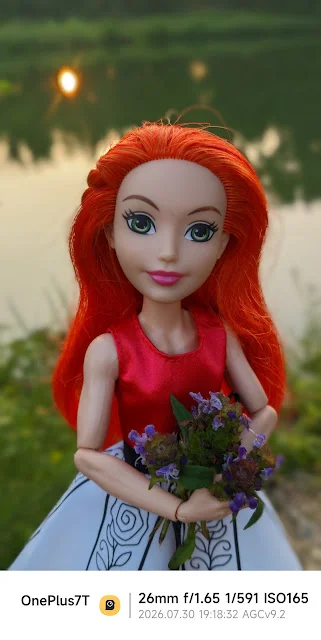
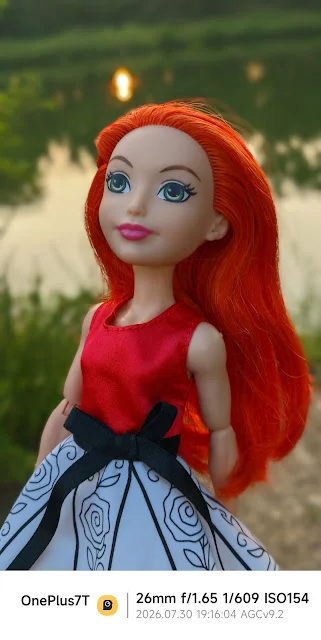
Treesa sent the Poison Ivy doll for World Doll Day after reading about the writer’s enthusiasm for a new Poison Ivy doll. She chose the closest match she had, then redressed it in the Razzle Dazzle Rose fashion pack dress from Crayola Pixie Doodles. Treesa named the resulting doll Poppy. The gift carries both a practical decision—using a doll already on hand—and a personal one in the name she gave it.

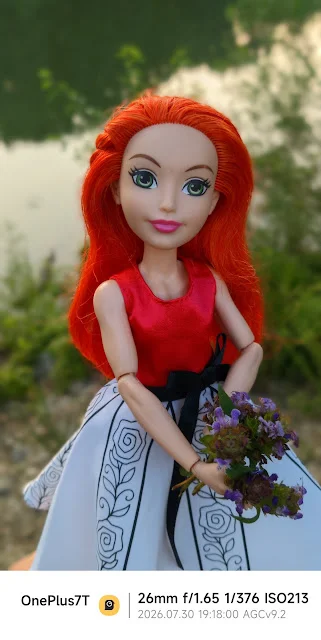

The appeal is in the combination: a character doll whose outfit has been changed, with a new name supplied by the person who put the look together. Poppy’s identity is easy to follow because the components are named: Super Hero Girls Poison Ivy, plus a Razzle Dazzle Rose dress from a Crayola Pixie Doodles fashion pack. That detail gives other collectors a useful starting point for recognizing the doll and tracing the outfit. It also shows how a custom presentation can be documented without obscuring the original pieces.

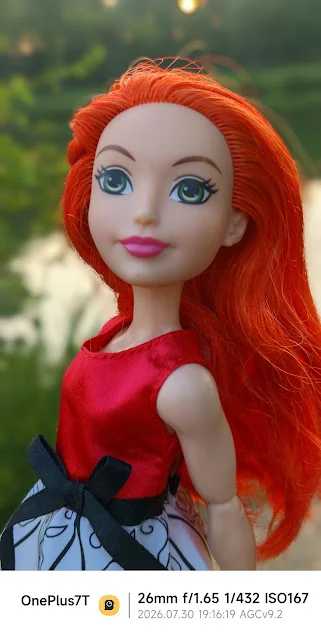
Poppy has articulated wrists, elbows and knees. Those joints offer more posing options than a fixed-limb doll, and the photographs show the figure from several angles. The writer notes that sciatica has made it difficult to get around, so the pictures were taken without getting down to the doll’s level. The images still document the outfit and articulation, while the photographer’s note gives readers context for their perspective. For collectors comparing dolls, articulation is a useful physical feature to record alongside clothing and character identification.


A vintage dress identified by its fabric
The second question comes from Emma, who works for ShopGoodwill. She recently received a tagged dress that she recognized as vintage Barbie clothing. An online search didn’t turn up an identification, so she asked for help. The writer recognized the fabric as the same material used for Francie’s skating outfit in the JC Penney exclusive Sportin’ Set, but couldn’t find the dress either. That comparison is a lead, not a final answer.

That fabric match is a strong clue, but it doesn’t settle the garment’s name or set. For collectors, a familiar print can narrow a search while leaving several possibilities open: the same material may be associated with one known outfit, while the dress itself could still need a separate identification. Here, the available details establish the comparison with Francie’s skating outfit and the Sportin’ Set, but no confirmed title for Emma’s dress. This is more significant than it looks: a visual resemblance can guide research, yet it can’t carry the full burden of attribution on its own.
What the tag and construction might tell collectors
The tag is another potential lead, yet the source doesn’t give its wording or describe any markings beyond saying the dress is tagged. Without those specifics, there’s no basis to assign a set number, date or official outfit name. Close comparison of the fabric, construction and tag could help another Barbie collector recognize it, but those details haven’t been reported here. In similar identification work, collectors often compare several clues together, since a tag, cut and fabric can each answer different questions.
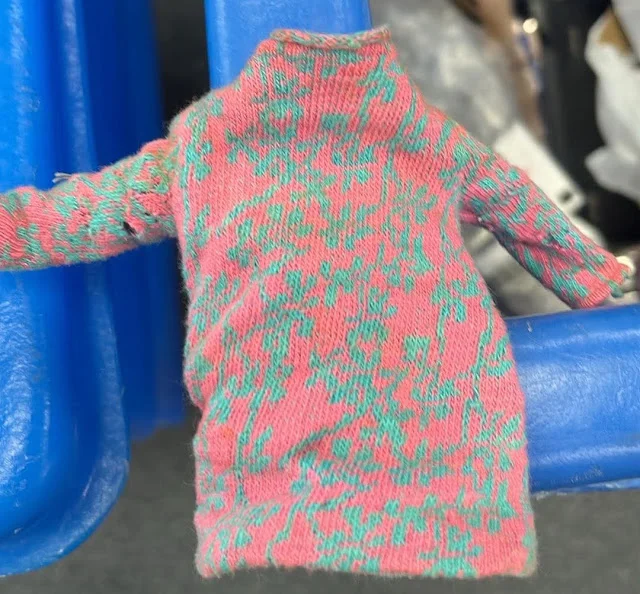
That distinction matters when documenting vintage clothing: a likely fabric connection is valuable evidence, while a confirmed identification takes more. For now, the most precise description is a tagged vintage Barbie dress whose fabric appears to match the one used for Francie’s skating outfit in the JC Penney exclusive Sportin’ Set. Readers who recognize the garment are invited to share its name in the comments. The open question is clear; the evidence is still incomplete.
Two useful lessons in doll collecting
Together, the two finds show different sides of doll collecting. Poppy’s outfit is a named fashion pack piece, paired with a named character doll and given a personal name. Emma’s dress is a recognition challenge that depends on matching a material to a garment. The next useful clue will be an identification from someone familiar with the vintage outfit; until then, the question remains open.
If you’re working in this space, the contrast is a reminder to keep personal styling and historical identification distinct in your notes. Poppy can be described confidently through the known doll, dress and custom name. Emma’s dress calls for more evidence before it can be assigned a place in a specific set. (And this is the part most people overlook.) A good clue can make a search more focused without making the answer certain.
For now, one doll has a name and a documented outfit, while the other garment still needs one. That’s the collecting record as it stands.
| Rev | Description | Date |
|---|---|---|
| A | Issued for reading | |
| B | Viewed 325 times | Current |