October Doll Show Finds: Ideal Betsy McCall, Flagg Dolls and Tiny Treasures
- Project
- Stamps & Postal History
- Drawn by
- [email protected] (Tam)
- Issued
- Sheet
- A-59
A Halloween season doll show brought rare early Betsy McCalls, handmade character dolls, antique finds and a few memorable purchases.

The October doll show’s strongest appeal was its variety: early Ideal Betsy McCall dolls appeared alongside handmade fantasy figures, antique dolls, tiny German miniatures and boxed Flagg dolls. The event also offered a reminder that a show’s best finds aren’t always the ones a collector takes home. Some of the most memorable pieces were admired from across a table; others became stories to revisit afterward.
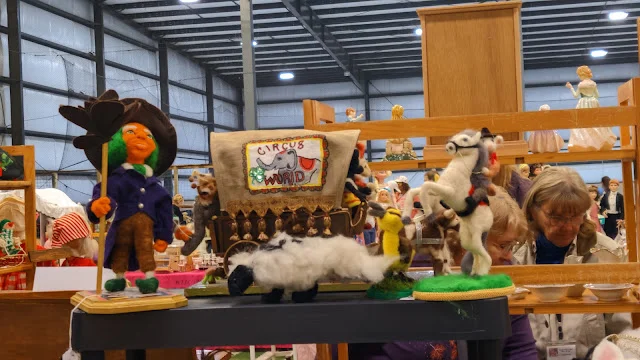
This was the final doll show of the year, held close to Halloween. Admission had risen to $8, a steep price for this local show. Ken came along, and a door prize helped soften the cost. We checked the winners’ board on the way out and didn’t see either of our names. When we returned, Ken’s name had appeared. The remaining choices looked unpromising until a $10 show gift certificate turned up among inexpensive porcelain dolls. He let me spend part of it and kept the rest, though we used half before leaving.
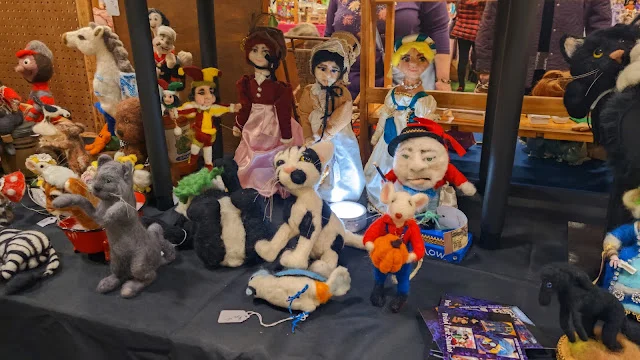
I hadn’t visited this particular show in a while, and it had grown. The tables offered a useful cross-section of the hobby: named vintage dolls, uncertainly identified finds, contemporary craft work and pieces whose appeal came down to a face, an outfit or a small detail.
Early Betsy McCall and dolls with questions
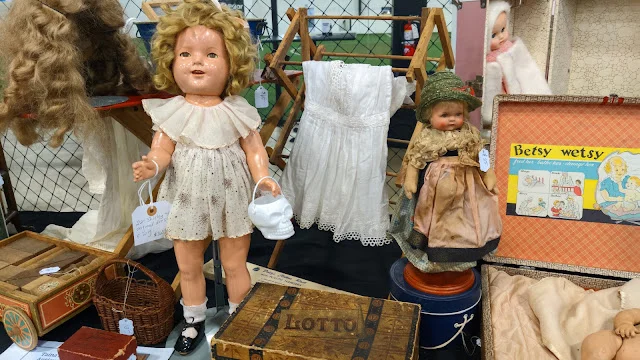
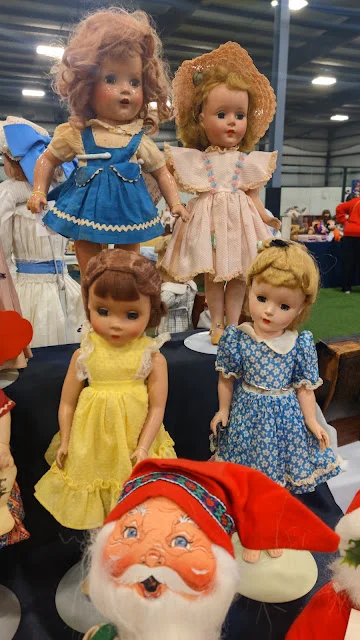
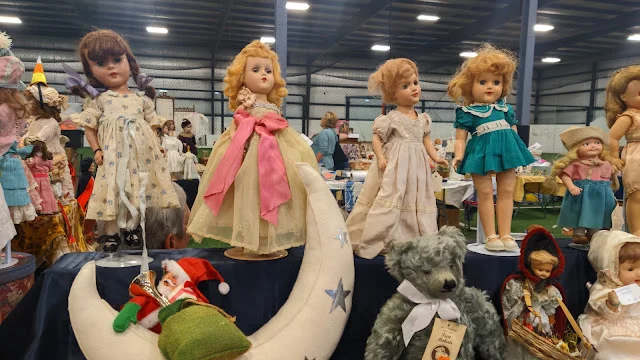
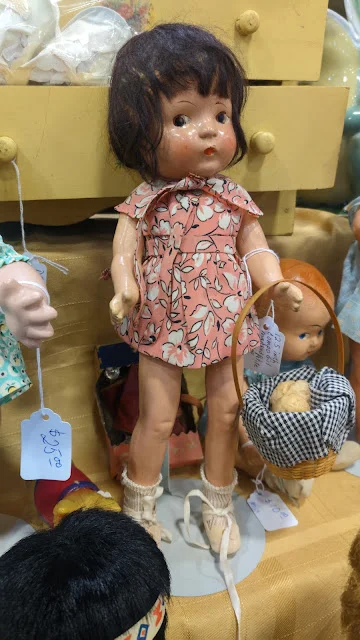
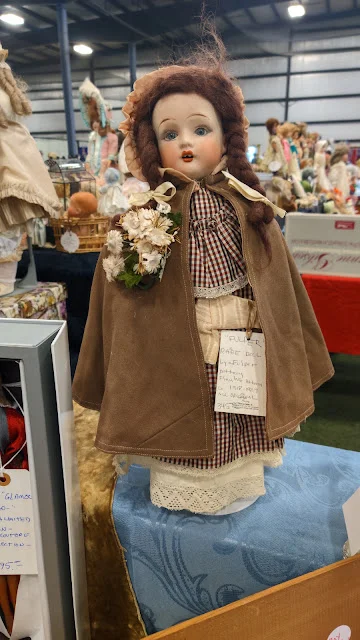
Original 1952 Betsy McCall dolls don’t turn up often in the shows I attend. The later eight-inch dolls are much more familiar, as are the eight-inch Tonner versions. This time, though, I saw several of the earliest Betsys. Ideal made these 14-inch dolls in 1952; they were the first non-paper Betsy McCall dolls.
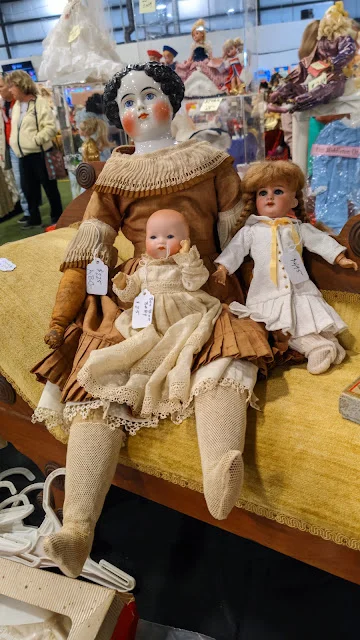

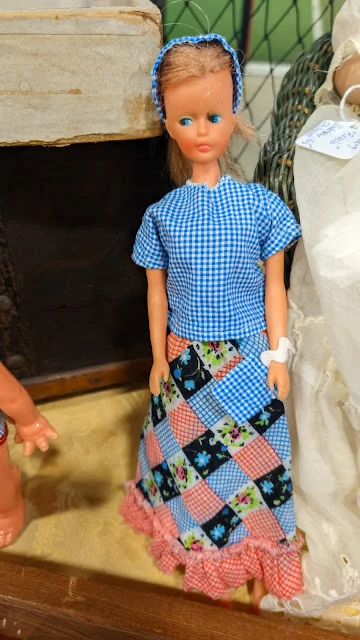
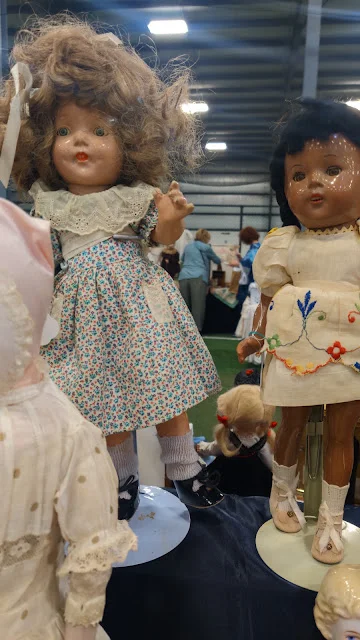
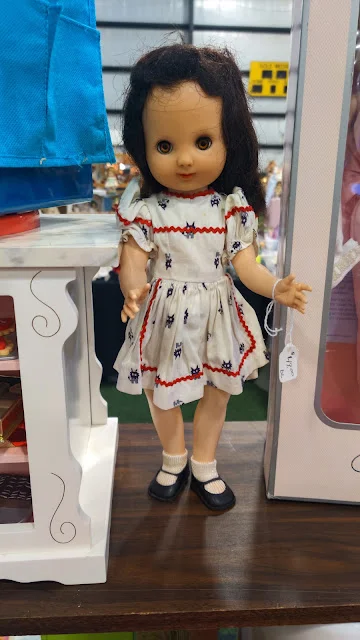
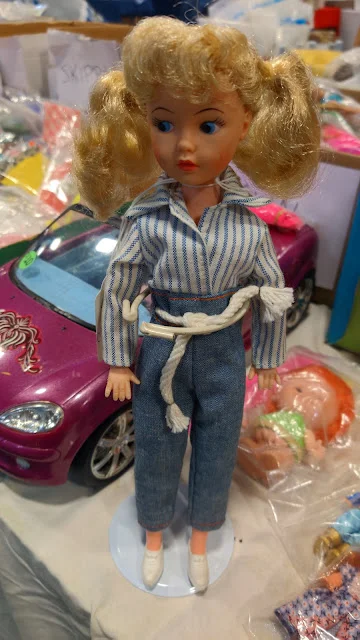
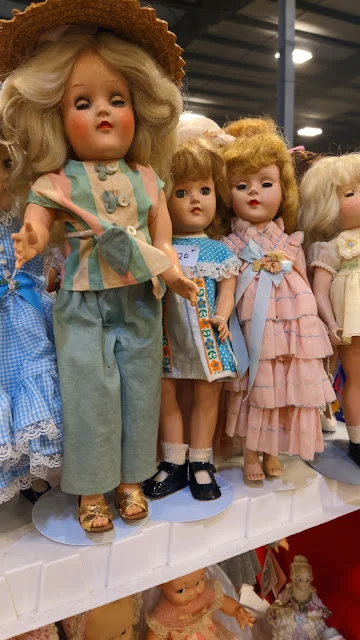
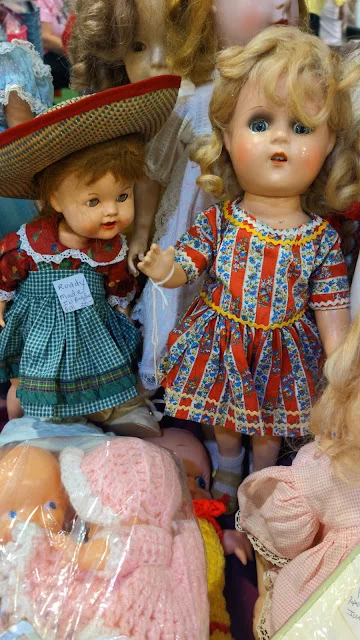
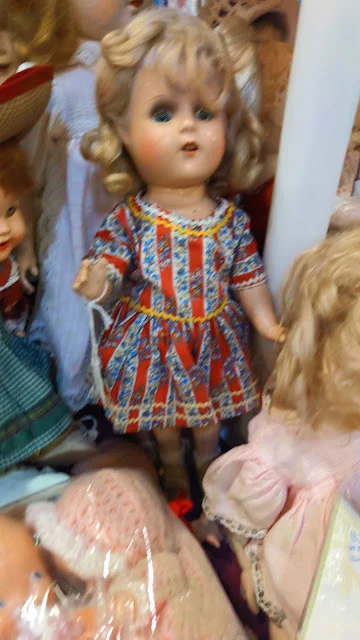
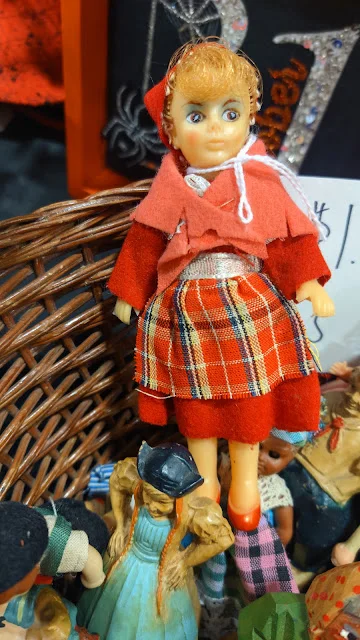
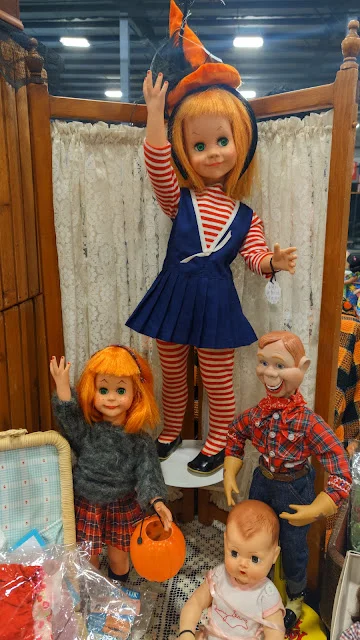
Nearby was a bargain-looking fashion doll with a face that brought Tressy to mind. I couldn’t identify her, so “Tressy-like knockoff” is as far as I’d go. Another pair seemed to include a celluloid doll on the left and a hard plastic doll beside her, though that material identification is tentative. At a show, a familiar face or material can suggest a direction for research; it doesn’t settle a doll’s identity by itself.


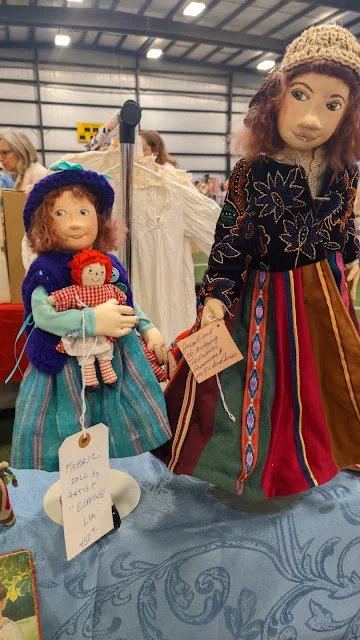
Handmade characters and animals
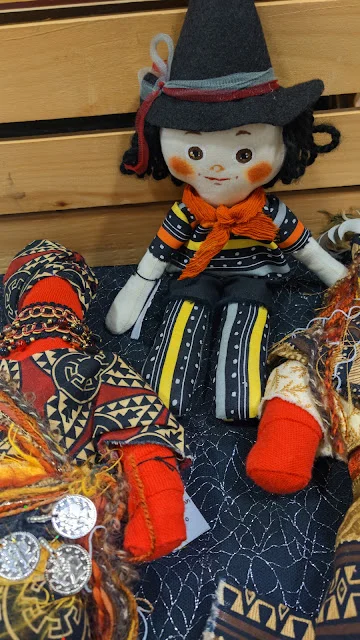
Bristol Park Studios’ felted dolls were a highlight. I’ve featured this maker’s work before, and the pieces keep getting more assured. The table had a strong Alice in Wonderland group, including a Mad Hatter and Red Queen, plus a striking Grinch. The range extended well beyond literary characters: beautifully made horses and other animals shared space with a cat, a tiger and more creatures.
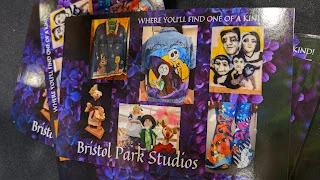 |
| The maker’s Etsy shop is BristolParkStudios. She is also on Facebook and takes custom orders. |


Fantasy continued with an Oompa Loompa, a mouse riding a horse, and a Humpty Dumpty that immediately caught my eye. I have a soft spot for Humpty Dumptys, including one I made myself. An arch filled with bunnies was another favourite. The Addams Family scene had Wednesday with her parents; Morticia sat in a dramatic high-backed chair, while Cousin Itt was easy to miss at first glance.
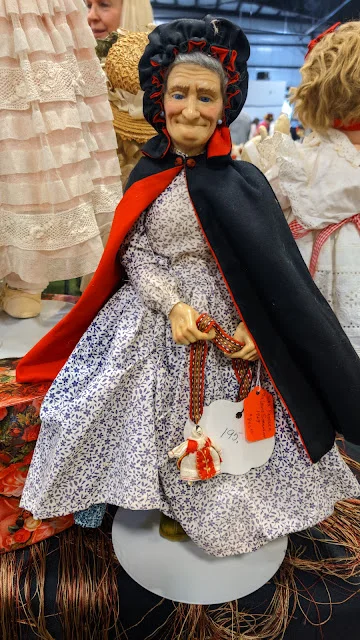
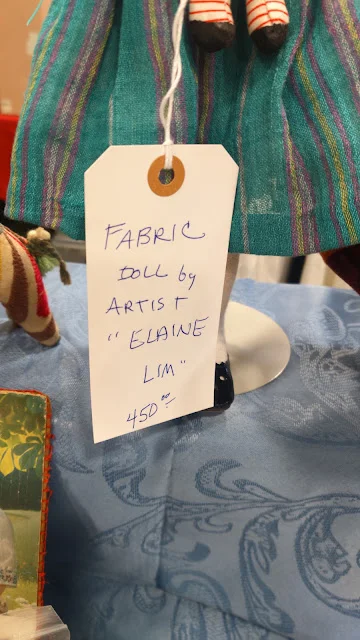
The largest character was Dobby, standing more than three feet tall. The maker said he took three days to complete. I thought a real pillowcase might have made his outfit feel more convincing, but the scale and overall presence were impressive. At another table, all the pieces to the Tutti friend Chris gift set Funtimers were laid out. An expressive old-lady doll and a table of antique examples offered a quieter contrast to the fantasy figures.


Antique faces and miniature finds
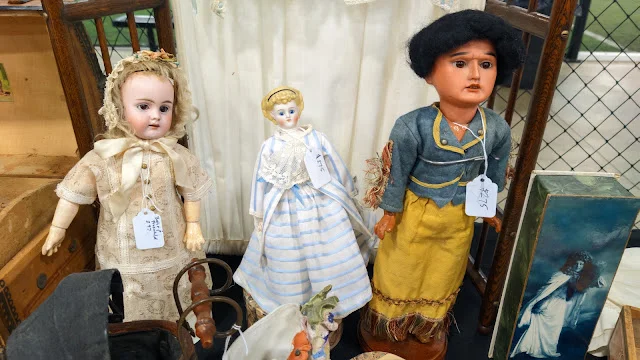
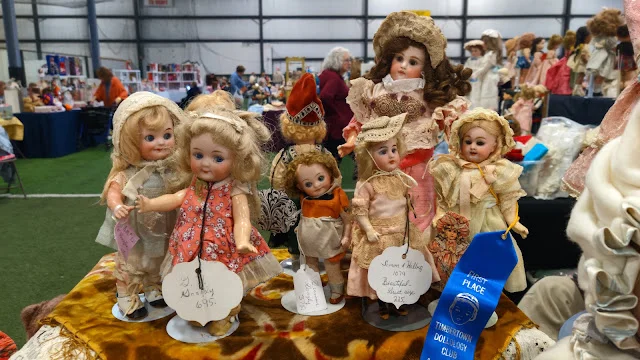
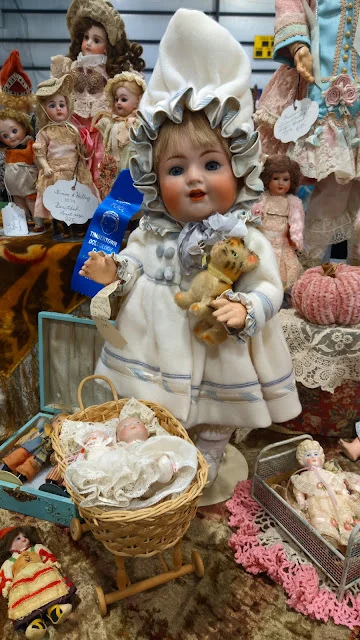
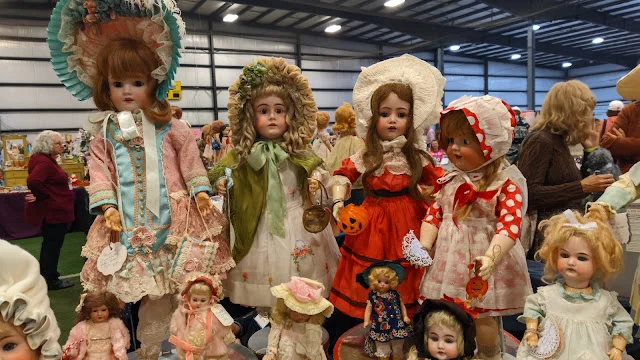
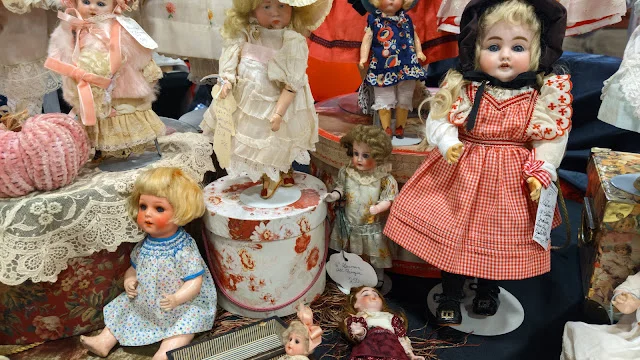
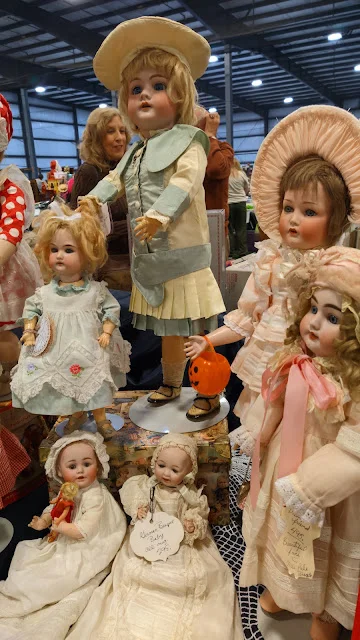
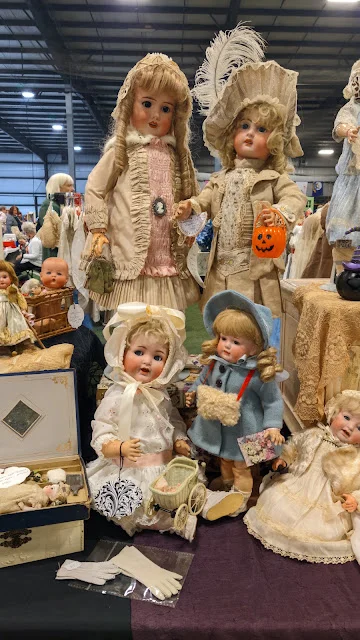
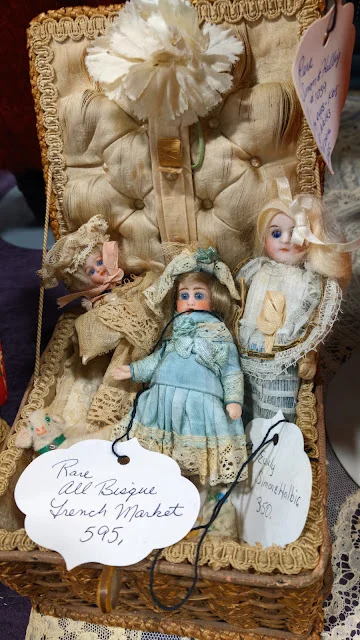
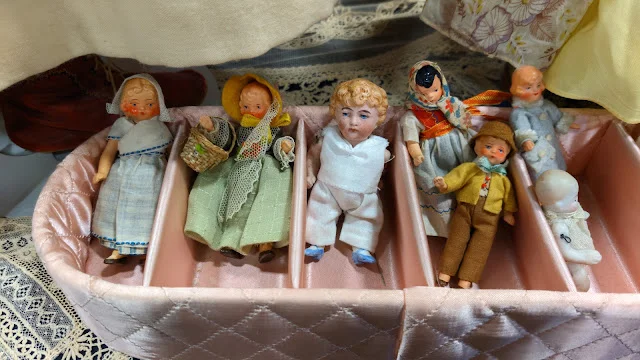
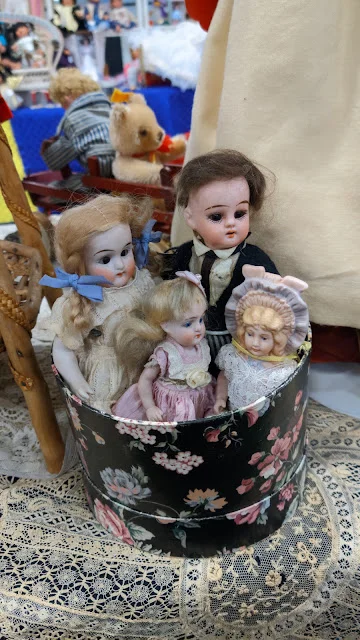
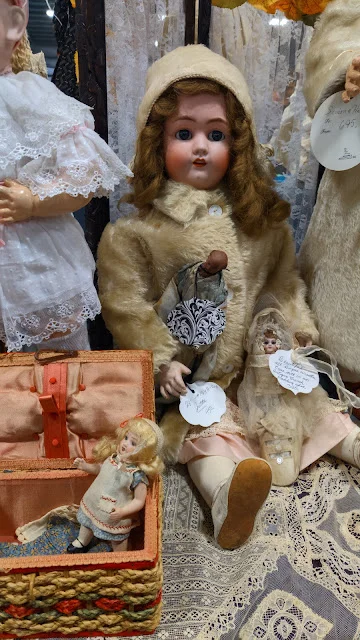
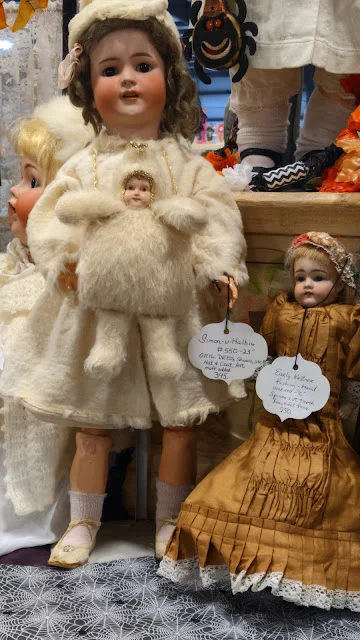
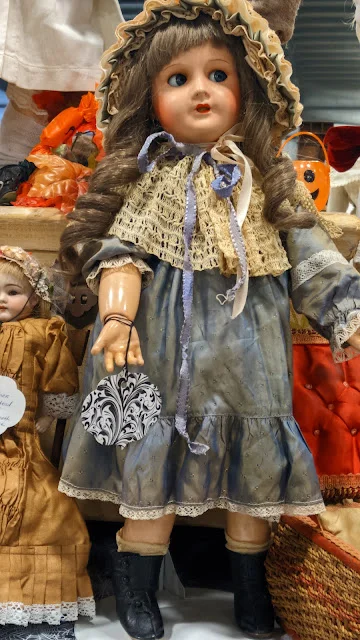
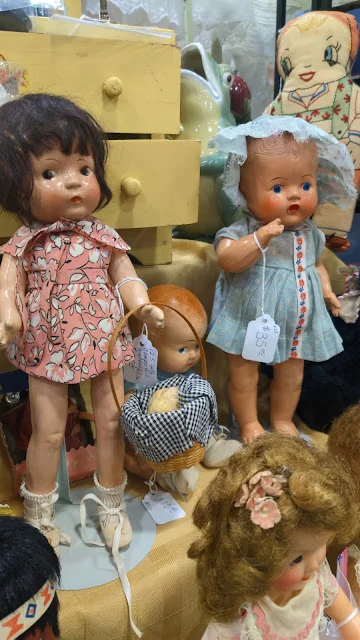
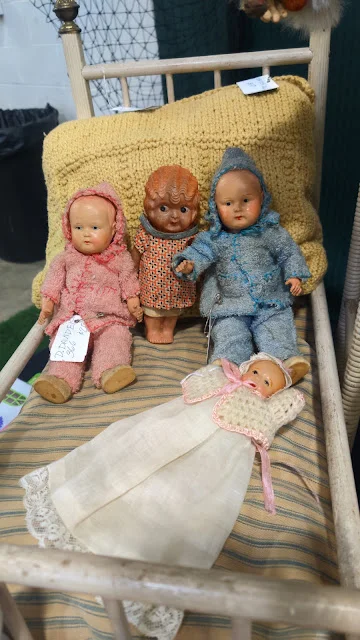
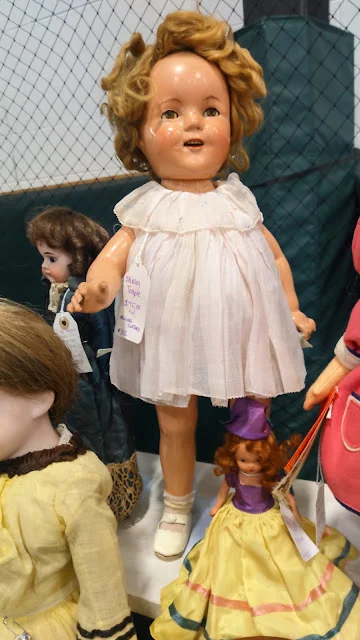
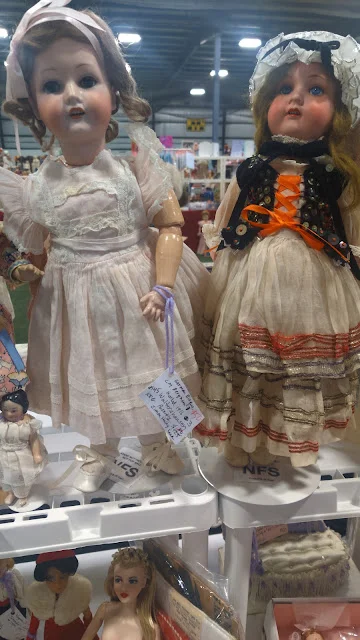
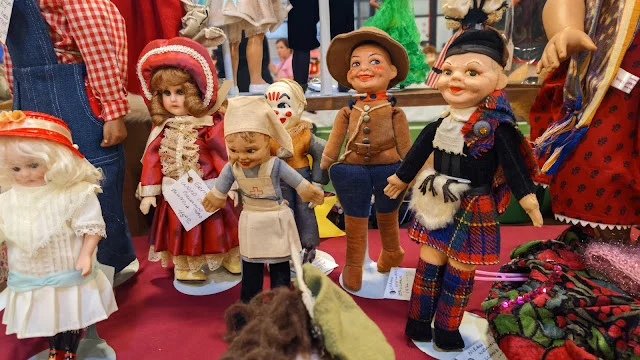
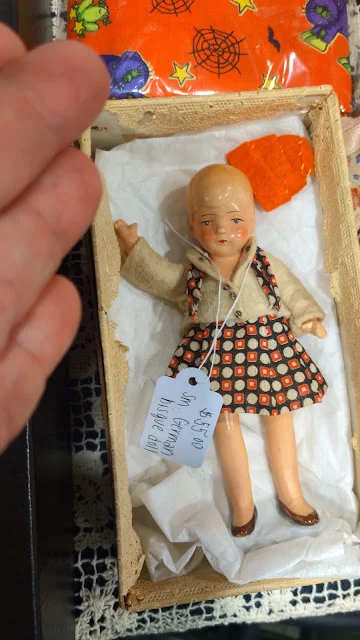
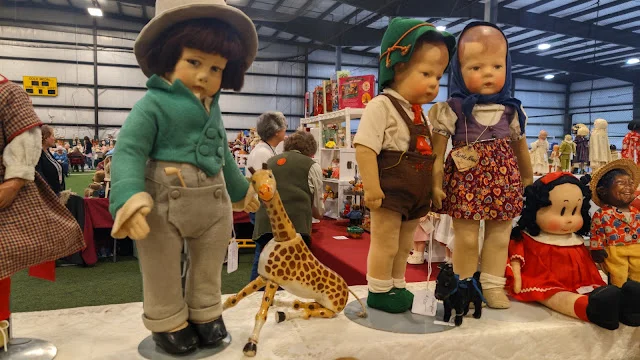
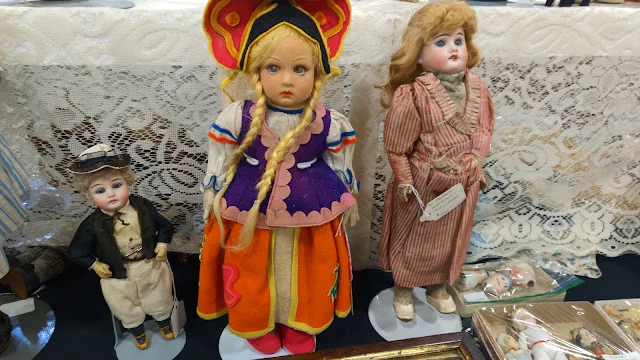
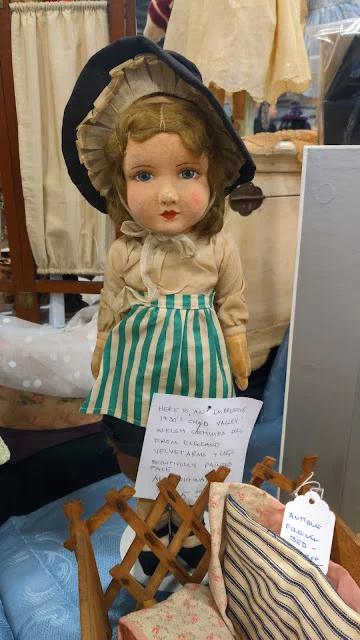
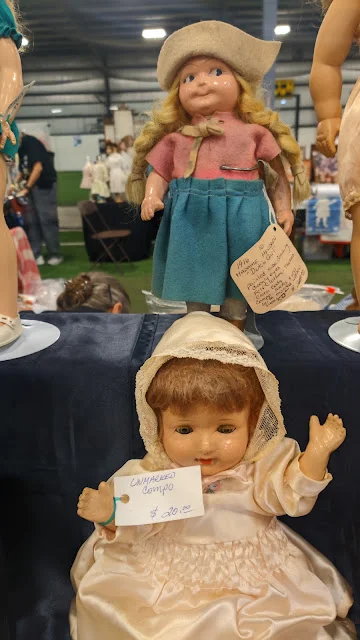
The antique tables rewarded close looking. There were Shirley Temple dolls, more Tressy-style clones, and a possible Swingin’ Sally. The resemblance to Tressy was strong, though the identification was uncertain. Other pieces included googly-eyed dolls, a baby in a wonderful coat, and a group of small German dollhouse dolls. A tiny scale changes the way a collection is displayed: these figures are easy to overlook in a crowded case, but their clothes and expressions invite a closer look.
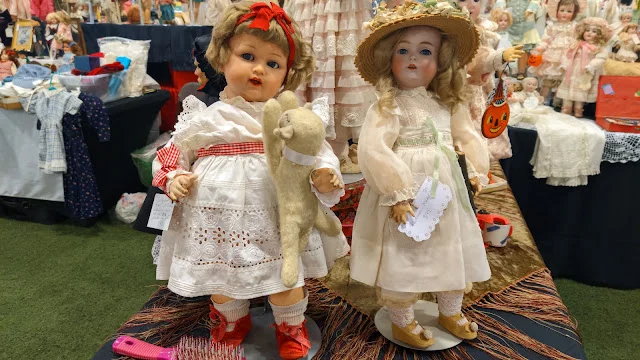
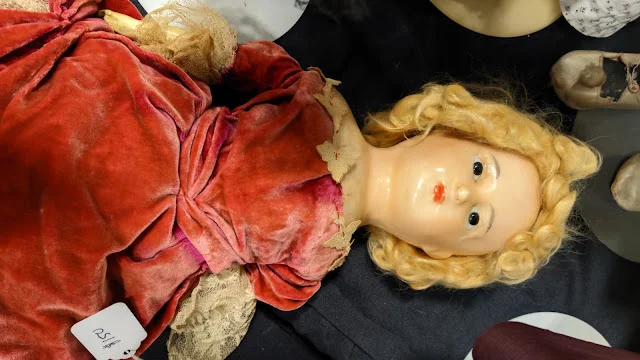
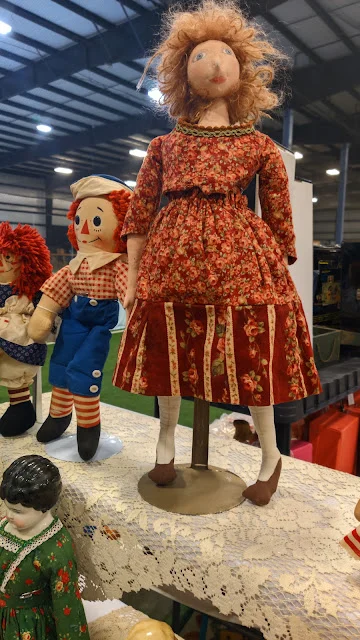
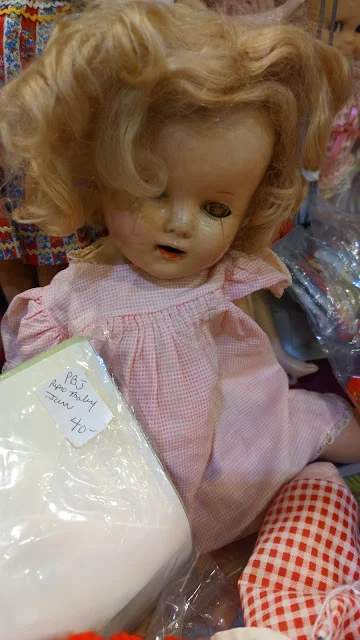
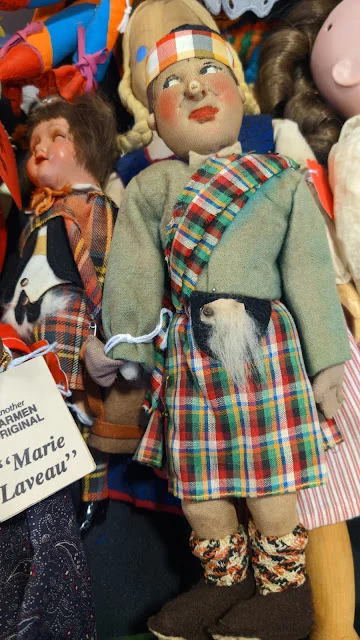
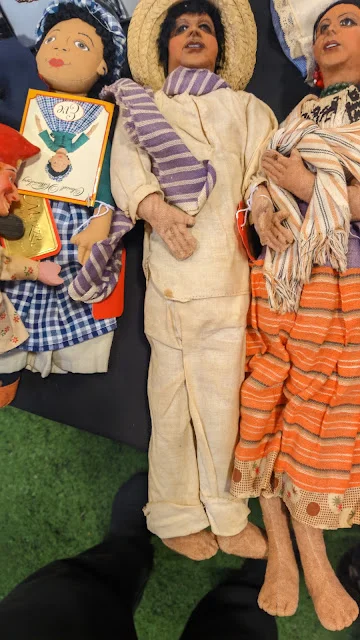
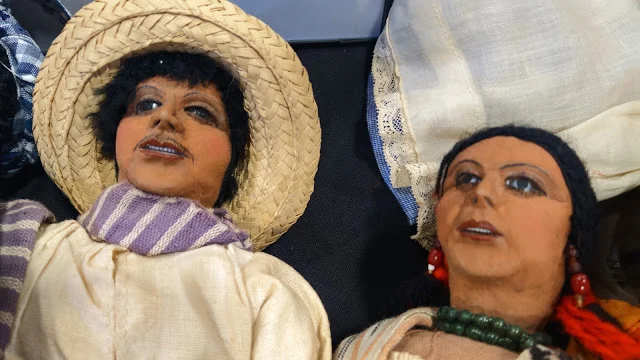
Some of the dolls that once felt like childhood companions have made their way into antique shops. That passage of time can be uncomfortable, but it also gives collectors a chance to see familiar playthings beside much older pieces. The table included dolls with different materials and faces, a possible wax-over form, cloth figures, and a characterful small doll with a muff-like accessory.
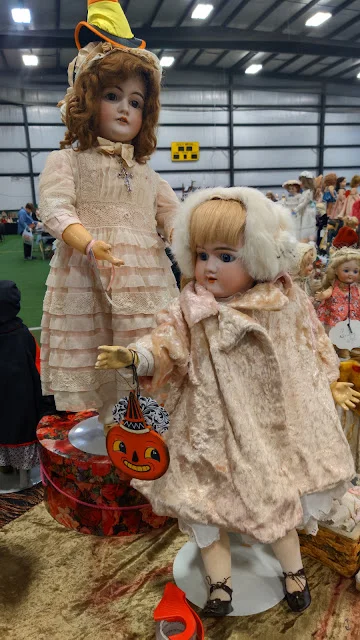
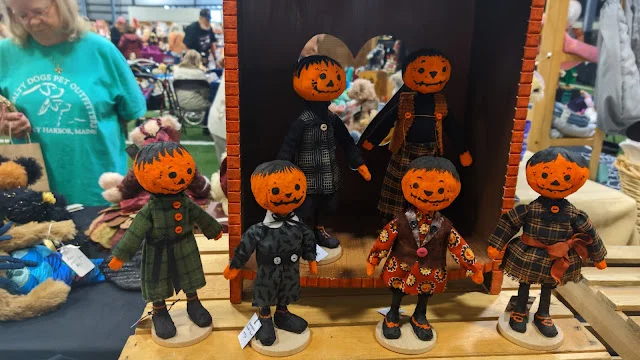
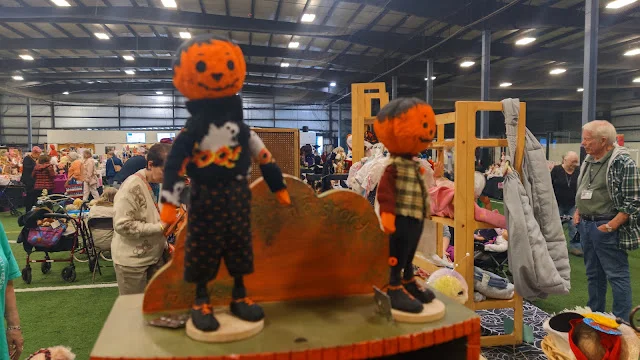
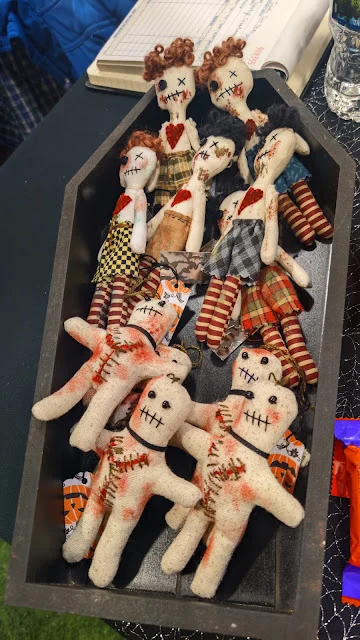
Wendy of WendyL Creations, whose work I’d seen at this show before, had a Halloween-ready display. Her macabre pieces included headless bodies hung on a small necklace rack, a clever use of a display fixture. She also makes cloth and spun-cotton figures. Among the cheerful pieces were a spun-cotton bunny, cloth dolls, Jack O’Lanterns, scarecrows, rag dolls and pins. Her Jack O’Lantern people were my favourites, especially one wearing a sweater made from a sock. Wendy said she had sold a lot that day, and she mentioned she has been making dolls since childhood.

 |
| The necklace rack made an unexpectedly effective stand for the headless figures. |


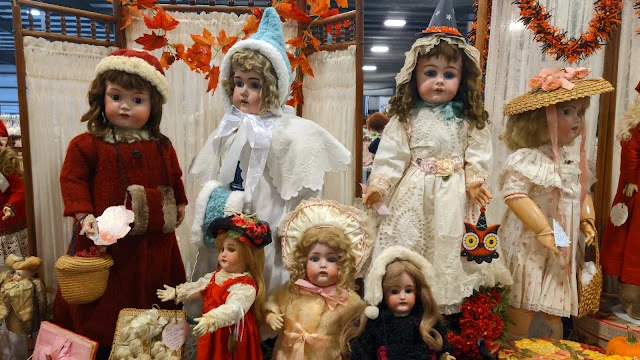
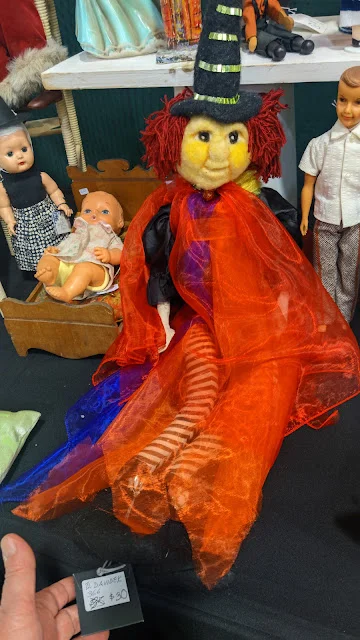
At another table, I found more Shirley Temples and began appreciating the old Madame Alexander dolls, particularly the Maggie face. An Annalee Santa happened to photobomb one view. There were more Ideal Betsy McCalls, two appealing dolls together, an unmarked dark-wigged Patsy-like doll, and winter-ready babies. Halloween witches and Shirley Temples seemed to fit the season side by side.
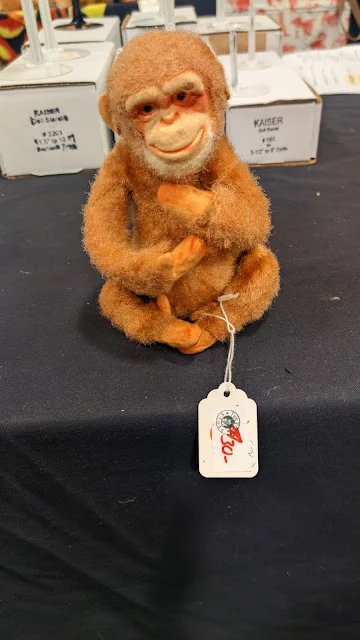
A monkey among Steiff animals brought back a childhood memory. The example at the show looked like a cheap toy, but it reminded me of my own, which wears a pink skirt and carries a bouquet. My sister persuaded me to buy mine by making it “talk” and plead, “Please buy me Tammy Mommy!” I sent her a photo of the show find. Her response was that Judy Poken had worn a skirt. The doll at the show was priced at $30 and had disappeared by the time we circled back.
Named dolls, unusual materials and collecting clues
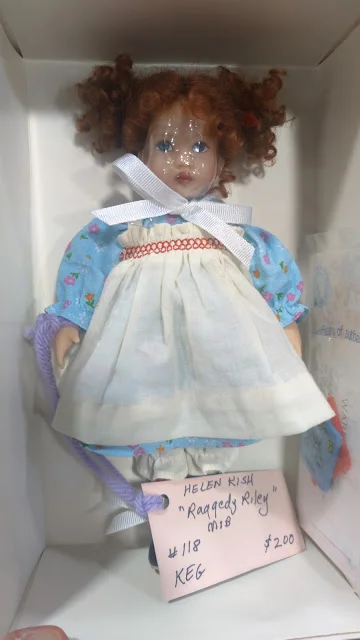
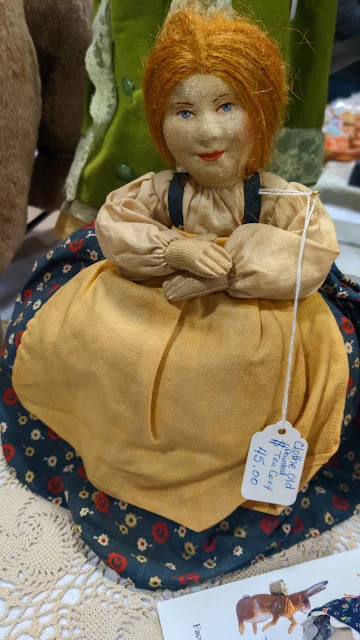
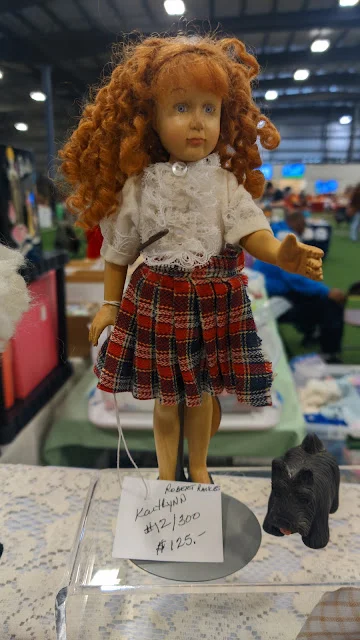
One long-standing wish-list doll finally appeared: Helen Kish’s Raggedy Riley. I was pleased to see her and disappointed that the price put her out of reach. A cloth figure reminded me of Mrs. Garrett from The Facts of Life; another turned out to be a tea cozy, made to cover a teapot and help keep tea warm. A small Robert Raikes wooden doll and an exceptionally mint-looking Ellie May, also known as Calico Lassie, were memorable finds.
Calico Lassie was a Tammy-clone type with a resemblance to Eegee’s Shelley. Kellogg’s Corn Flakes offered her by mail order in 1964 and 1965. The doll and extra outfits were offered for $1, while a separate offer provided three additional outfits for another dollar; both offers could be had for $2. At least five extra outfits appear to have been made. The character resemblance explains the familiar nickname Ellie May, but the doll was unlicensed and couldn’t officially be sold under that name.
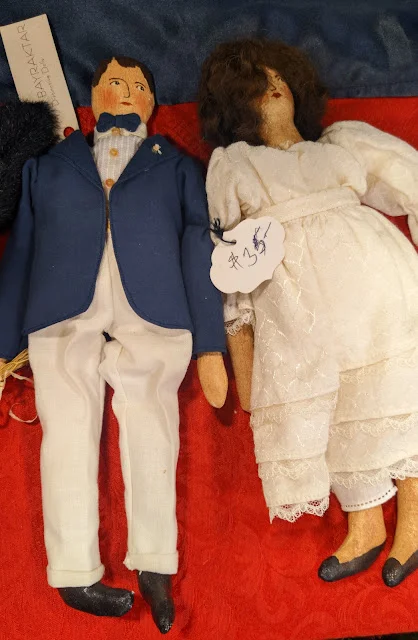
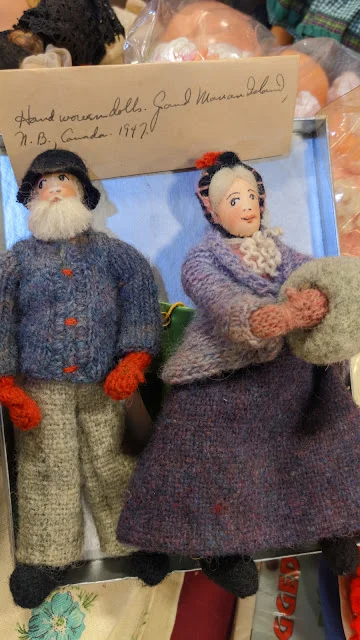
Other tables held Roddy dolls, cloth couples and a 1947 Canadian old couple, identified by their label. I wondered whether one figure was holding a bottle in a wicker cover. A larger doll also recalled one of my tiny dollhouse figures, despite being around six inches tall. The visual resemblance was striking, but the scale made clear they weren’t a matching pair.
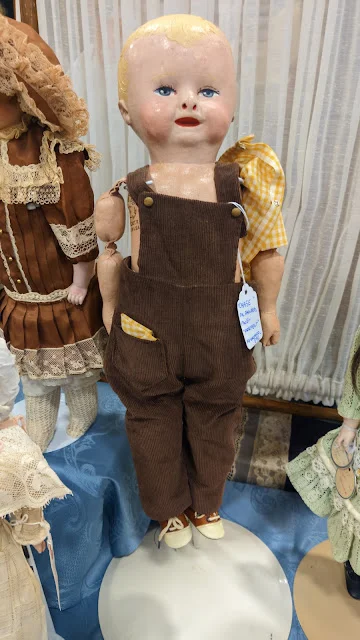
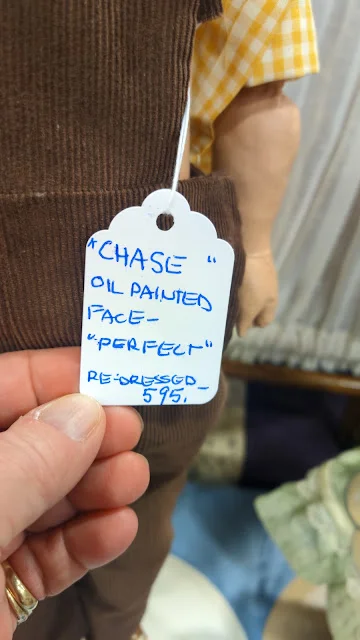
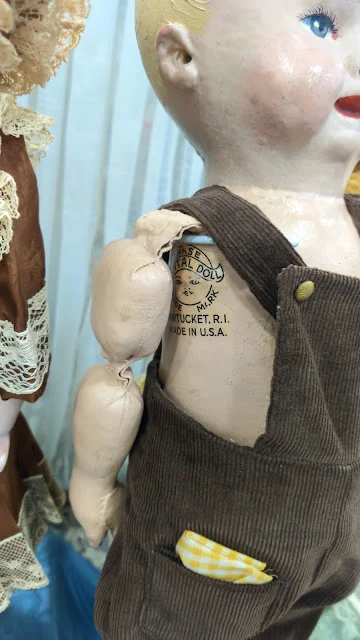
A roughly 20-inch doll was identified by the dealer as a Martha Jenks Chase doll, though the dealer wasn’t its owner and couldn’t provide much background. Chase dolls were made by dipping stockinet dolls in sizing, pressing them into plaster molds and painting the features by hand. Martha Chase began making them in 1889, with an aim to create washable, unbreakable dolls. The business continued under her children after her death, and later dolls used materials other than cloth. Chase dolls included different sizes, skin tones and book characters.
This example was priced at $595. Its face looked as if it might have been repainted when compared with pictures of other Chase dolls, though that was only an impression. A stamp in its armpit read “Chase Hospital Doll.” Chase Hospital dolls were made for nurse training. The first, nicknamed “Mrs. Chase,” stood 5 feet 2 inches and was used in a Pawtucket, Rhode Island, hospital to teach practical patient care. The doll’s stamp offered a lead to follow, while the uncertain paint condition was a reminder to distinguish what a label says from what a quick inspection can establish.
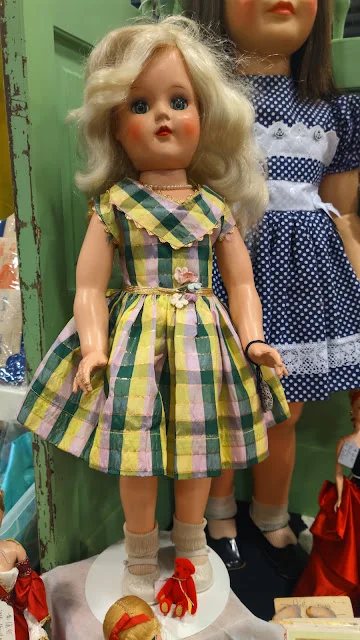
Two Brikette dolls by Vogue also caught my attention. They came in different sizes and hair colours. I’ve long wanted the larger redhead, and this one had her original outfit, but the price was too high. The smaller doll was also dressed in original Brikette clothes and likewise stayed on the table. Nearby, a pretty doll I thought might be a Toni brought to mind one of my own, now somewhere in storage after a fire and a round of packing.
Boxed sewing dolls and Flagg finds
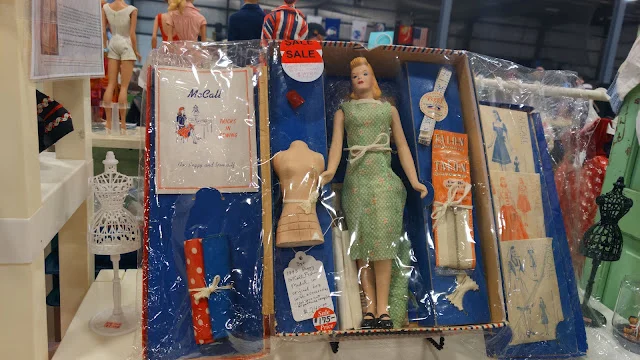
A McCall’s sewing mannequin doll offered a tidy example of a playset with its accessories and original box. These mannequins were meant to let children practise sewing. I’d previously found a Singer Butterick version at a flea market, so seeing the McCall’s example made for a nice comparison. Another doll on the table dated to 1916.
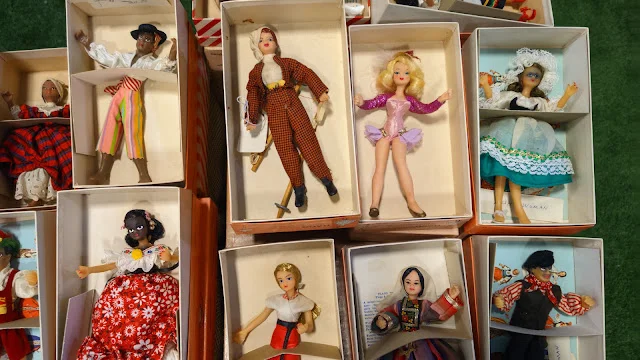
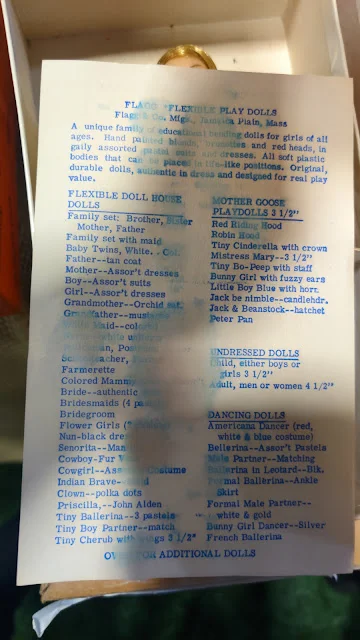
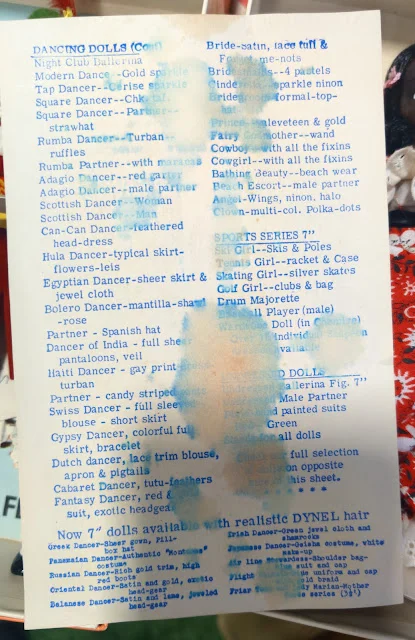
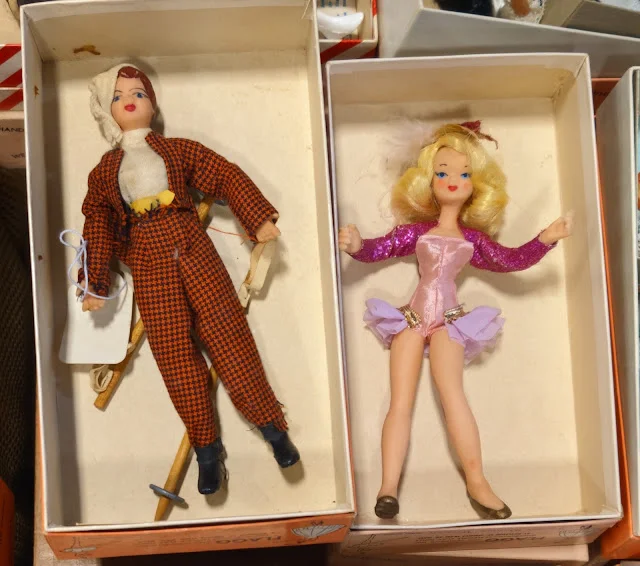
A dealer who specializes in doll parts and clothing had the usual boxes of $5 dolls, along with stacks of boxed Flagg dolls at the same price. Flagg’s roughly nine-inch figures are wired and bendable, much like Tutti dolls; collectors may know the maker better for its dollhouse families. Their finishes can look rough, but some designs have plenty of character. I was torn between a skier in plaid trousers and jacket and a dancer. The skier came home with me. The boxes were meant to include a paper listing the other dolls available, but mine was missing its sheet, so I photographed one from another box.
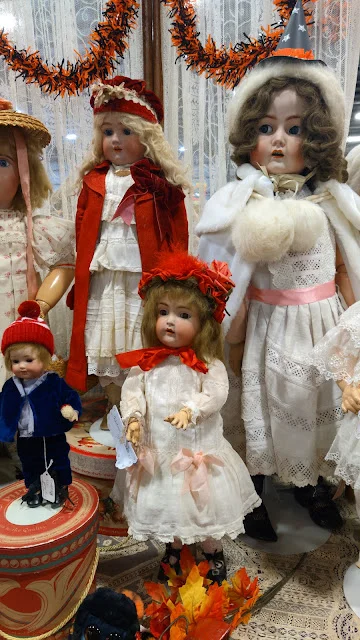
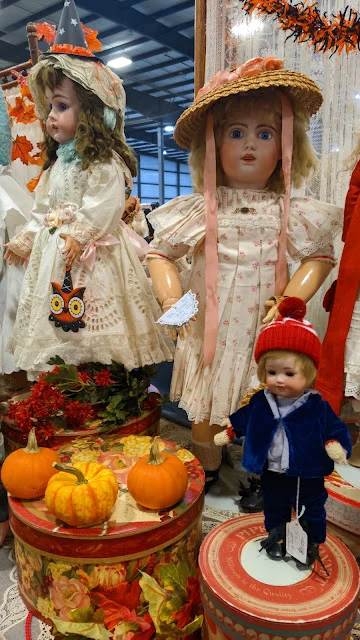
The show also had a table selling donated dolls to benefit the Mazza Museum in Findlay, Ohio. The museum houses a large collection of original artwork by children’s book illustrators, including a room of pop-up book illustration art. The dolls had been donated by a well-travelled collector; because they didn’t fit the museum’s focus, they were offered for sale to raise money for the institution. A couple appeared to have stockinette over pressed, molded faces.
The finds that came home
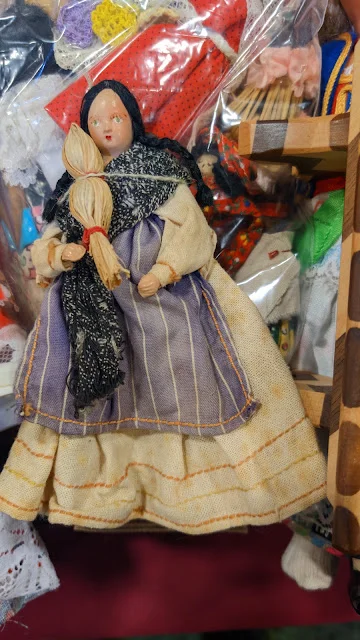
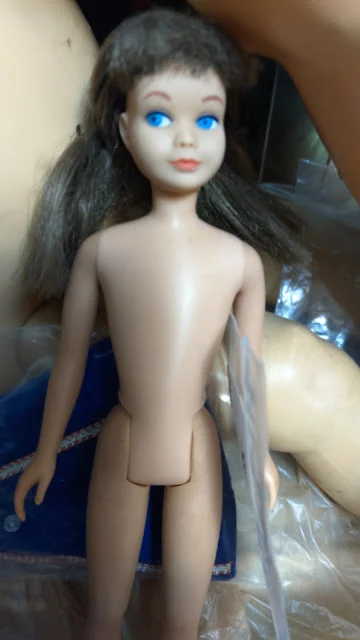
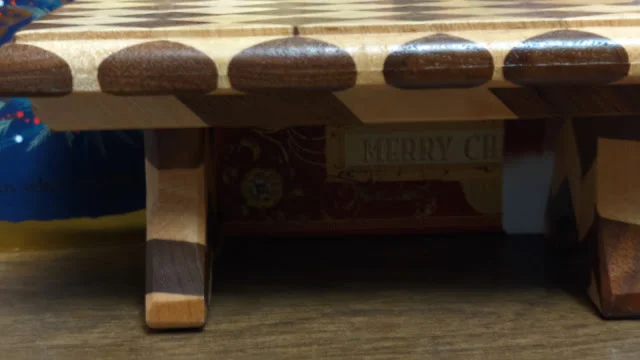
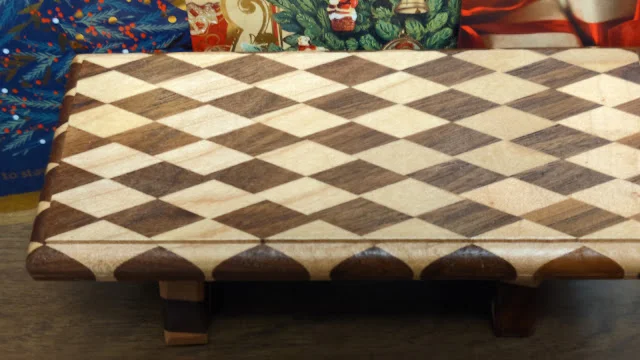
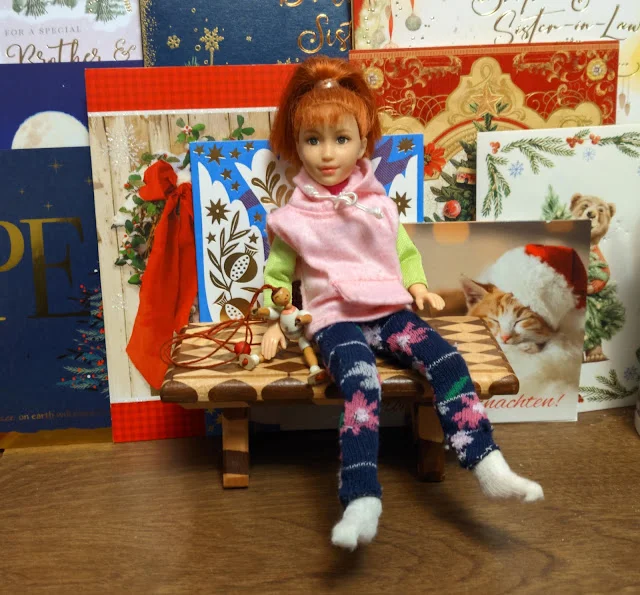
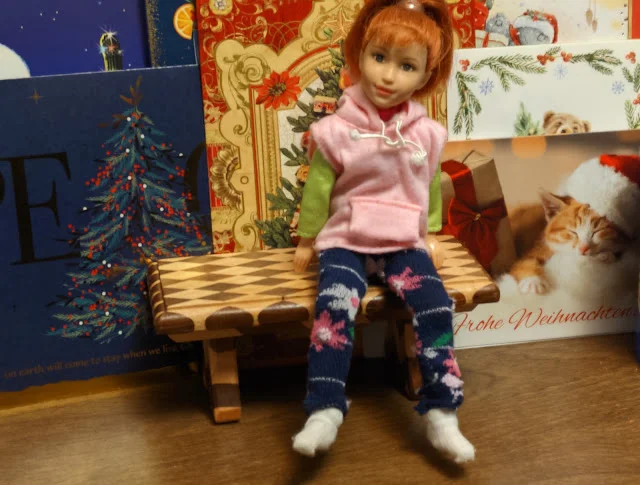
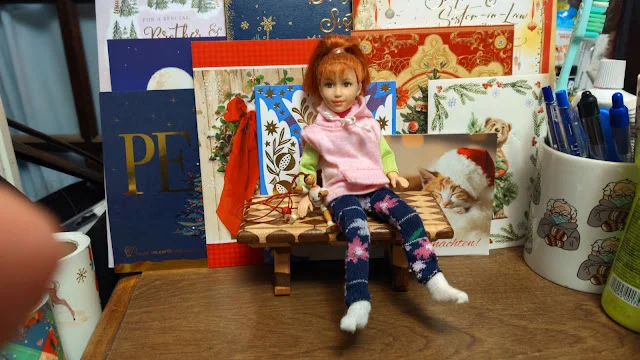
Along with the Flagg skier, I bought a test market Skipper, often called a Sample Skipper. These were among the first Skipper dolls sold and differ slightly from the versions collectors encounter more often. She needs a visit to the Tam spa, but she was an exciting find. I also picked up a finely made wooden bench for Tammy World. It may look like a table in the photo, but it’s a bench, built from pieces of wood in different shades rather than painted to create the colour pattern.
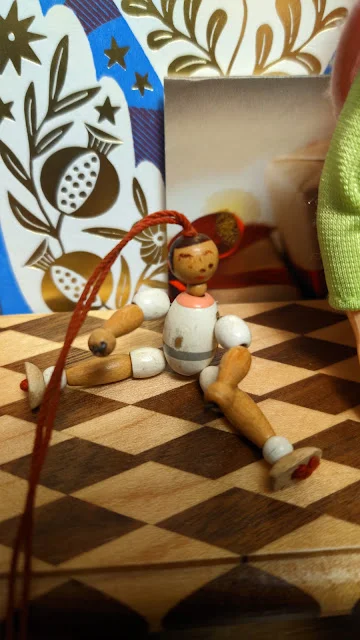
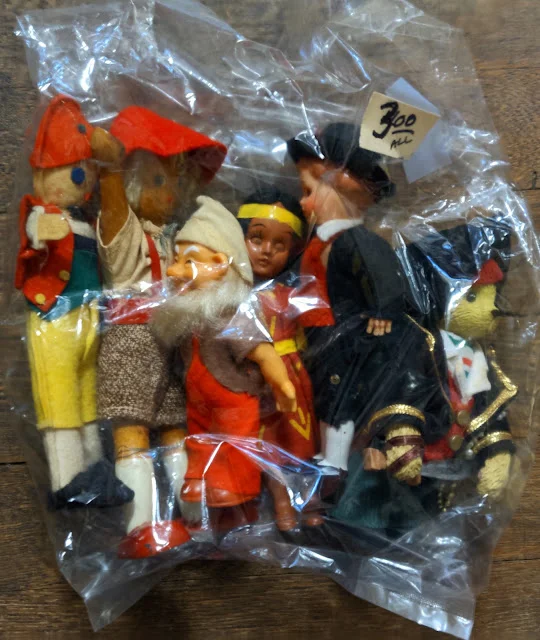
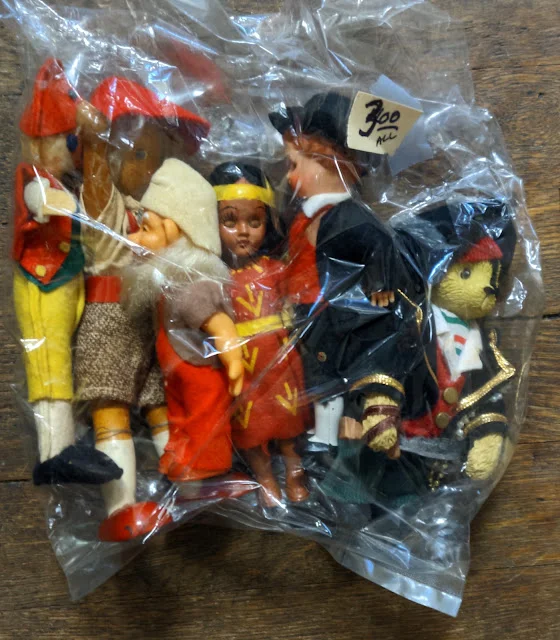
A tiny jointed wooden doll on a necklace came from the Flagg dealer. It’s a good size for Tammy. I also bought a coat for Ideal’s Pepper, called Frosty Frolics. The buttons had been replaced, but that didn’t spoil the appeal; I’ve always liked dolls in coats. A bag of small dolls cost $3. I initially wanted the little gnome-or-hillbilly figure, then spotted a felt figure and decided the group was worth bringing home. It also included a wooden Polish doll.
There was more to see than one visit could turn into purchases: a rare early Betsy McCall, handmade Halloween figures, antique dolls with intriguing labels and small pieces that invite further identification. That’s what made this last show of the year satisfying. The next doll show is in spring. I skipped the final miniature show because Ken was recovering from a UTI and didn’t need another crowd while he was getting better. Until the next show, the best clues are the details worth checking again: maker’s marks, tags, outfits, materials and the stories attached to each doll.
| Rev | Description | Date |
|---|---|---|
| A | Issued for reading | |
| B | Viewed 879 times | Current |