Doll Show Finds: Erna Meyer Miniatures, Vintage Fashion Dolls and More
- Project
- Toys & Action Figures
- Drawn by
- [email protected] (Tam)
- Issued
- Sheet
- A-66
A collector’s day off turns up Erna Meyer dolls, vintage favorites, unusual finds and a few tempting buys at a doll show.

A day at a doll show offered a welcome pause from caregiving and a chance to see an unusually broad mix of dolls, from tiny Erna Meyer miniatures to fashion dolls and one-of-a-kind creations. The best find was waiting near the entrance: two little Erna Meyer girls, each with a story written in her worn clothes and hair. Around them, tables held familiar names, puzzling faces and the kind of inexpensive pieces that can make a collector rethink a careful spending plan.
A day off, and a difficult first decision
I missed the big toy show earlier in the year because I was caring for Ken. After months of heart palpitations, occasional high blood pressure and fatigue, I decided I needed a proper break. I prepared Ken’s meals, set out his pills and arranged the rest of his food before staying overnight with my sister. We went to the doll show the next day.
We arrived about an hour and a half after opening. I prefer getting there early, before appealing finds disappear, but my sister isn’t one to hurry. The show had moved to a smaller room, yet there was still plenty to see. I had birthday money from Fuzz and was trying to keep it available in case other expenses came up. Our car was being repaired after the insurance company had wanted to write it off; replacing it wasn’t affordable. As Ken put it, we knew this car and its history. We hoped the repair would give it a little more life.
The first table stopped me in my tracks. A box held several dollhouse-size dolls, including Erna Meyer figures and a Tiny Town boy with a lollipop. I’ve always had a soft spot for miniatures: Caco dolls such as Kay and Jeffrey, German dolls from the 1930s such as Dollhouse Boy and Girl and Tillie, and Erna Meyer characters such as Dollhouse Lady and Dollhouse Grama. [See an earlier post about these small dolls.]

The lollipop boy was there too, still in his box. The two Erna Meyer girls that caught my eye were more of a dilemma. One wore a plaid dress and had a bare patch at the crown; perhaps a hat or scarf had once covered it. The other wore a coat and scarf. The dolls were $15 each, but the dealer offered both for $15. I’d barely entered the room, and spending right away felt risky. Still, I didn’t want to return later and find them gone. I bought the pair.

The same dealer had nine-inch dolls with pressed felt faces. They were charming, but I managed to leave them behind. Nearby were Old Cottage dolls, including a sweet pair. I have several Old Cottage dolls already, which helped me pass on these, too. [More Old Cottage doll posts.]


Fashion dolls and oddities across the tables
The show leaned heavily toward fashion dolls, with older dolls and handmade pieces mixed in. One table had a Shoe Baby Beans doll in its original packaging. The phone photo was sideways, but the packaging made it an especially appealing display find. Another dealer showed dolls I couldn’t identify, along with handmade pipe-cleaner animals and small stuffed toys made by her daughter. I’ve tried making pipe-cleaner dogs and bears myself; hers were far more polished. A tiny blue elephant brought back memories of Fuzz’s childhood toy, lost in a house fire. I made a miniature version of that elephant for an earlier project. [The miniature elephant post.]


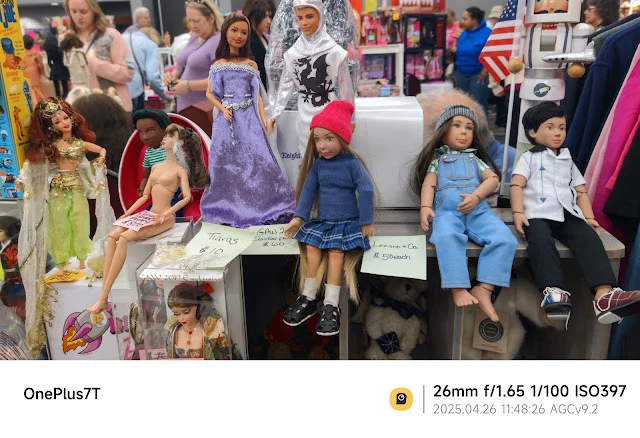

Integrity Toys had a striking fashion doll, and I spotted a promotional doll for Carolina Freight that was described as rare. I didn’t recognize her. Other tables held a Susie doll with the Tressy head sculpt, a Madame Alexander, and Selma DuPar James, the third and final doll in the Barbie Gold Label Harlem Theatre Collection. There were plenty of Genes, too, alongside metallic Spectra dolls made by Mattel in the 1980s.




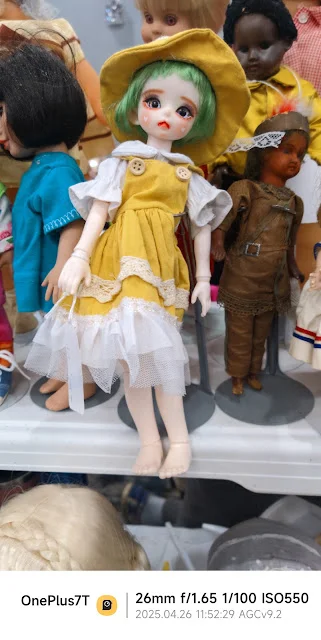
A Hi Glamm doll by MGA brought Winx to mind, with her long, slim legs and large eyes. At Paul David’s table, dolls he identified as Sunshine Family clones stood out. Elsewhere, the table display jumped from a tiny antique doll with a memorable face to a doll called Kathy, a familiar-looking girl I couldn’t place, and a hand-painted figure that might have been made for a convention or as a one-off. Mumpy Terri Lees dolls appeared as usual for Raging Moon. The Brady Bunch dolls were startlingly lifelike.




Some of the smaller and less familiar dolls kept me guessing. One had enormous eyes; I wondered if she might be a Takara doll. Heidi’s friend Spunky, made by Remco in the 1960s, wore a dress that seemed borrowed from Heidi. Spunky was meant to be a tomboy, and her glasses made her especially appealing. Another small figure was Kayla, a brunette friend from the Soggy Doggy Friends set. Collectors call these roughly six-inch Kelly dolls “Amazon Kellys”; only a few sets were made.



A pair of Blues Brothers dolls briefly fooled me: I first mistook one for Jackie Gleason. They turned out to be the later Blues Brothers, with John Goodman in place of John Belushi. I bought Dan Aykroyd as a gift for friends Birgit and Heinz, whom we stayed with in Germany. Their shared affection for the Blues Brothers is part of how they met.

The table mix also included a one-of-a-kind genie doll by Gilly Girls. I remembered artist Angie Gill from the days when we were both dealers; she used to specialize in Kelly repaints, and some still turn up at shows. A 1970s Sears store-exclusive Barbie item was unfamiliar to me, while a Boys and Girls Forever You doll brought back a memory of selling my own. I’d been persuaded to part with her when I needed money; her new owner loves her, which is a comfort.


An earlier look at the Boys and Girls Forever You doll
Discoveries, familiar favorites and the final purchases
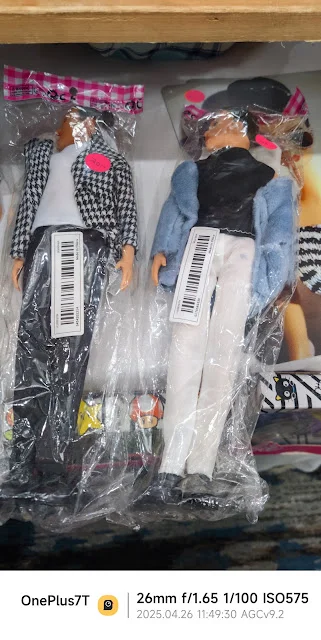
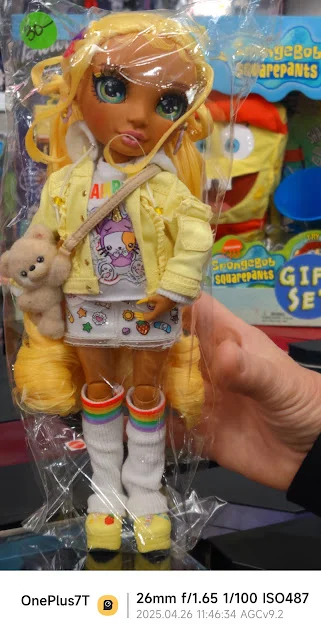
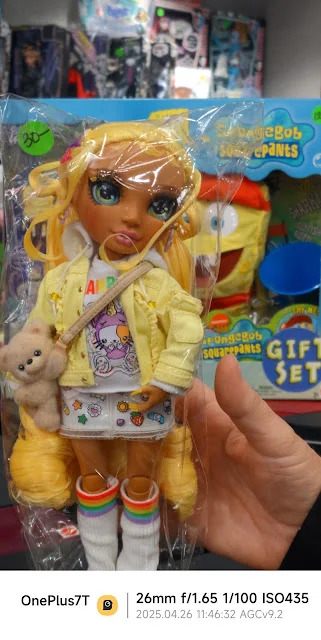
A Barbie Looks doll looked appealing, but the table’s strongest draw for me was its assortment of older dolls. There were Alices, Madame Alexanders, Nancy Ann Storybook dolls and both old and new Betsy McCall dolls. I liked one Alice even though she wasn’t the style I usually seek. There were also inexpensive Barbie Basics Ken lookalikes with man buns, Leanne dolls by Denis Bastien that I couldn’t quite decide about, and a Barbie movie doll I hadn’t seen before. My sister liked a Madison doll from the Rainbow/Shadow High Twins set, but it cost more than she wanted to spend.


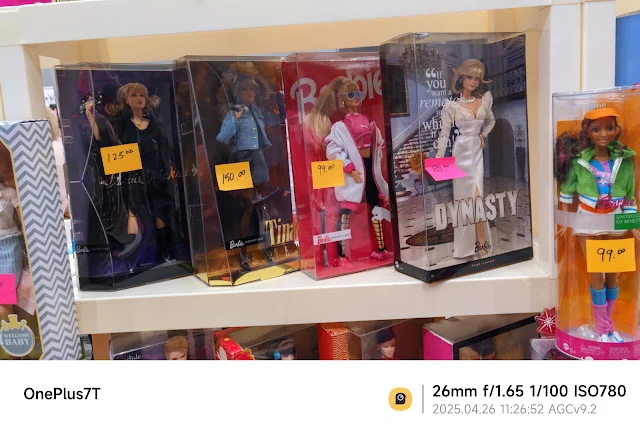

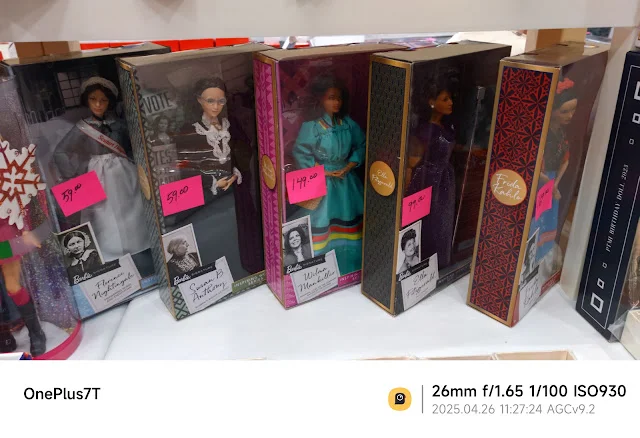
Elsewhere, a highly articulated doll had changeable eyes and a wig, and I spotted a ball-jointed doll I liked. One table gathered several Alices with other familiar makers. A Honeyhill Bunch Baskin Robbins Ice Cream doll was a first for me in person; the set included two dolls and a Baskin Robbins ice cream shop. I also saw Inspiring Women dolls, including Kristi Yamaguchi, and a Linda Evans Dynasty doll whose likeness worked for me despite its standard Barbie head sculpt.


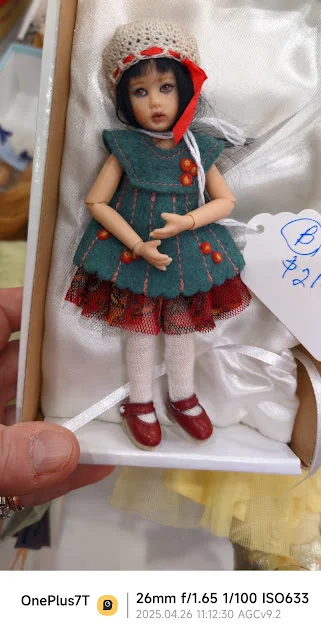
Other discoveries included Toffee dolls, a J-Doll I’ve long wanted but never found at the low price I paid for my others, and Flotti dressmaking kits that looked as though they might date from the 1960s. I noticed a doll resembling a Hollywood doll I already own and think of as an Alice. There were small dolls, an old couple with finely made faces, and a Robert Raikes Hitty-style male doll. A tiny Kish doll made its size especially clear in hand.


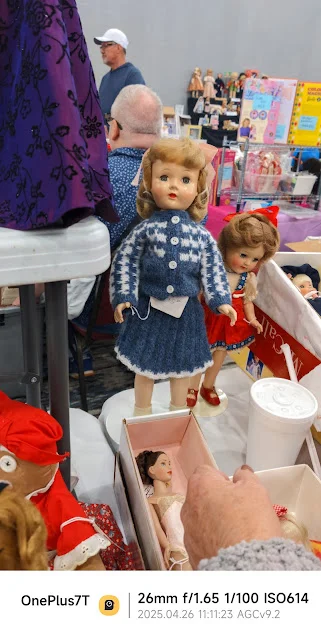


Earlier notes on Honeyhill Bunch dolls

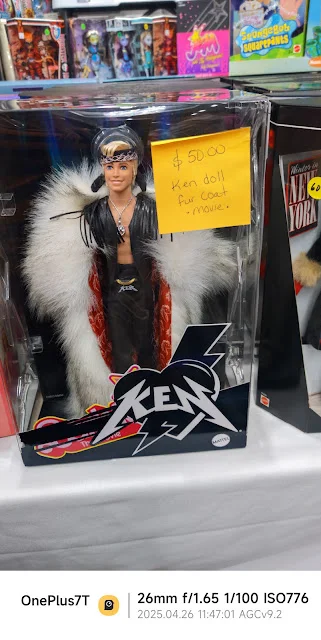
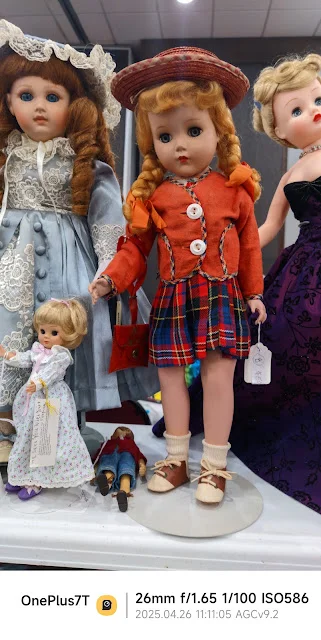
The tables also held a reproduction Skipper I never bought, Barbie Bee by Mark Ryden, a Takara Lisa doll and two mysterious ladies. I came across a boxed Tiffany Taylor with unusually fluffy hair, a doll from the live-action Cinderella film I hadn’t seen before, and several more characters whose names escaped me. A Shirley Temple doll and a sweet girl in a cozy sweater set made for a gentler display. There was even a fellow who looked like a customized Ken, though I couldn’t identify the artist or story behind him.




At last, I stopped trying to resist every temptation. The two Erna Meyer girls were my first purchases. The girl in stockings has very prominent knees, with wear that suggests plenty of play; her friend’s coat is still closed, and I’m tempted to open it carefully to see the complete dress underneath. The other doll has hair on both sides, though it needs attention. A small hat or scarf could finish her look.


After checking with Ken, I also bought the Dan Aykroyd doll for Birgit and Heinz. They have been generous hosts and thoughtful friends, sending gifts and treats after Ken’s stroke as well as at Christmas. I wanted the doll to go to them.
The birthday gift from Fuzz went toward a Barbie Basics doll with a petite frame and Made to Move body. My sister encouraged me to get her, and Ken wanted me to enjoy the day. The doll looked fun to pose, and another collector had already reviewed her. [Read the Barbie Basics review.]

Once I’d bought that doll, a Penny Brite clone in a pajama-style playsuit was an easy $2 decision. I’m not sure of her identity; Miss Cindy by Cragstan is one possibility. For $1.50, I picked up three clothing pieces, including two pairs of Ideal Tammy Sleepytime pajamas. The elastic needs work, but the fabric and overall condition look very good. The third piece is a pretty sunsuit or lingerie-style outfit whose doll I couldn’t identify.


That was the final haul: two small Erna Meyer dolls, a Barbie Basics doll, a gift for friends, one inexpensive clone and three clothing pieces. The show’s strongest reward was the range—from a well-loved miniature with worn knees to boxed dolls, maker names and questions still waiting for answers. The finds I brought home are a reminder that a good collecting day doesn’t need a long list of purchases; sometimes two tiny dolls are enough.
| Rev | Description | Date |
|---|---|---|
| A | Issued for reading | |
| B | Viewed 422 times | Current |