Lumibricks Barber Shop 19012 Build Review: Lighting, Slide-Out Floors and a Manual Mishap
- Project
- Toys & Action Figures
- Drawn by
- [email protected] (Unknown)
- Issued
- Sheet
- A-101
Street Fusion’s 2,557-piece Barber Shop pairs intricate printed details and layered lighting with accessible interiors—and a third-book printing error to watch for.

A modular build with plenty to inspect
Lumibricks’ Street Fusion Barber Shop 19012 makes its strongest impression through the way its three floors open up for display. The 90-degree swing-open sections and removable, drawer-style floors bring the interiors within easy reach, while the integrated lighting adds another layer to the build. This first installment of the review follows the unboxing and assembly; a separate post covers the finished model’s features and the reviewer’s cosmetic changes.
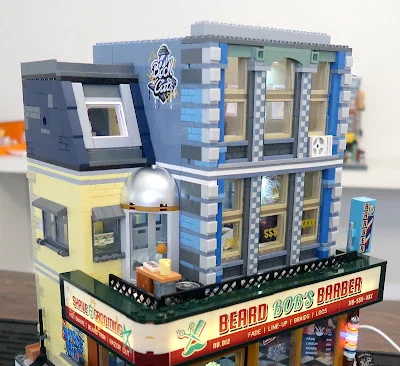
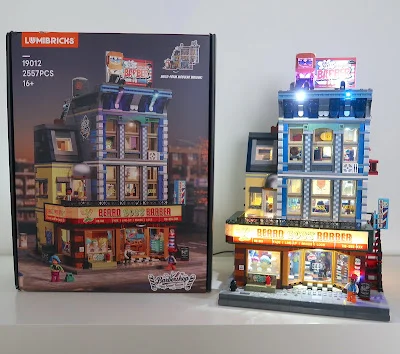
The set is also known as Beard Bob’s Barber. Its box lists a recommended age of 16+, a height of 15.4 inches and a footprint of 10.1 by 10.1 inches. The specification list gives a piece count of 2,557, although the opening description calls it 2,257, so buyers may want to check the packaging or product listing for the confirmed figure. Other listed contents include four minifigures, 83 printed bricks, 21 light points, seven light strips and three instruction booklets. Lumibricks suggests an average build time of 16 hours for one builder.
The lighting can run from a battery case that takes three AA batteries, or through a Type-C connection to a power bank. Tweezers and a part lifter are included. The set is listed at $149.99 USD, and Lumibricks describes it as compatible with Lego and other brick brands. The reviewer, who received the set from Lumibricks, says the bricks are made by Gobricks and reports strong clutch and overall quality.

Printed elements replace sticker sheets for many of the shop’s signs and decorative touches. Wiring is routed through the structure during assembly, and the floor sections can be separated. Those choices shape the experience from the start: there’s a fair amount to keep track of, but the reviewer found the instructions manageable, including the lighting work.
Unboxing: 51 bags and a separate lighting kit
The box shows the Barber Shop alongside other Street Fusion modular buildings. The reviewer’s copy was marked with a production date of January 30, 2026. Inside are three substantial instruction books and 51 parts bags, grouped by the numbered stages in the manuals. At the time of the review, digital instructions had not yet appeared on the Lumibricks site.
Book 1 covers the lighting kit, minifigure assembly and steps 1–6. Book 2 contains steps 7–10, with the final stages, 11–15, in Book 3. The first group includes special elements for guiding or concealing LED wires. A separate bag holds parts for the four minifigures, while another contains large baseplates and printed pieces. The reviewer counts 15 bags in the first group, 11 for bags 4–7, 11 for bags 8–11 and 14 for bags 12–15.


The signature orange box contains the custom light components. The reviewer recommends checking the kit against its guide and testing every light before embedding wires in the model. A small screwdriver is supplied for the battery compartment, along with metal tweezers, a brick separator, a USB-C hub and a USB-C/USB transfer cable.


First floor: a barber shop that swings open
Book 1 begins with the building’s foundation. The reviewer usually adds a raised MILS plate beneath modular builds for extra strength and stability, and did so here; a separate tutorial shows that modification. The reviewer also adjusted the sidewalk to match a personal standard, so the supplied instructions are the reference for the intended layout.


Early in the build, the reviewer tests the shop’s swivel section, a design also used in Lumibricks’ Record Shop. Lighting is already being threaded into the structure, and the interior begins to take shape around a shampoo station and a counter with a barber cape. Printed tiles show hairstyles and artwork, giving the shop visual character without stickers.


Step 4 forms the shop floor, with two rotating barber chairs and an upright vacuum. The completed floor slides into the first story and can be pulled out to show off the furnishings. The storefront adds another display moment: two LED strips sit behind the front sign. The reviewer found the strip’s adhesive weak on an earlier Lumibricks build, so added small pieces of double-sided tape here to hold it in place.


Printed glass appears in the windows and door, and the barber pole lights up. Together, these details make the first floor feel more like a finished shop than a simple room behind a facade.
Second floor: an office with moving details
Book 2 shifts the scene to a lawyer’s office. A bulletin board contains what the reviewer reads as a possible nod to a future Street Fusion set, while a table tennis reference recalls the table in Lego Fire Brigade 10197. The office’s slide-out floor contains a desk, bookcase and water cooler, and the balcony door opens onto a small outdoor space.


A photocopier and bookshelf form a swing-away section at the front of the office. It’s a clever use of the model’s opening design, though the reviewer isn’t sold on the blue accents beside the windows or the blue checkerboard detail, and plans to change those after the review. The floor connector pad lets the builder check that the lights work when the story is attached.


Third floor: apartment, rooftop and a booklet error
The apartment occupies the top story, with a bedroom and washroom. Its access route runs through the lawyer’s office staircase, an arrangement the reviewer questions because it’s unclear how the apartment’s occupant would come and go when the office is closed. The washroom includes a toilet, paper roll, sink, reflective mirror and a washing machine that isn’t visible in the photograph.


A feature wall and bookcase make extensive use of printed pieces, with a lighted ring among the details. The front facade repeats the swing-away approach used below. The reviewer notes that the third instruction book had a production fault: steps 200–218 were missing and another set of pages had been duplicated.


The reviewer built the missing section by using later pages as a guide, getting most of it right but reversing two lights in a four-light run. The intended arrangement has two white lights, plus purple and blue lights illuminating the building’s front. Lumibricks sent digital copies of the corrected manual later that evening, after the builder had worked through the gap.

The apartment’s removable floor adds a bookshelf, takeout dumplings and a game controller; the reviewer’s basketball is a personal addition. A television, rooftop water tank and skylight round out the scenes. The minifigures are included in the set, though the review saves closer views of them for its bonus pictures.


Build verdict
The review’s two snags were one missing printed tile and the faulty third manual. Lumibricks responded quickly with replacement digital instructions, and the reviewer expects the booklet issue to be addressed. Despite the pause, the build was described as time-consuming rather than difficult. The swing-away walls and slide-out floors make the assembly engaging, while studded floor tiles provide useful spots for posing minifigures in the small scenes—a welcome addition the reviewer says wasn’t present in earlier builds.
For modular-building fans, the appeal here is in the mix: a busy barber shop, an office and a compact apartment, all fitted with printed details and layered lighting. Check the instruction books as you reach the later stages, and test the lights before concealing their wiring. Once assembled, the opening floors and facades give the set plenty of ways to show off what’s inside.
The companion post with finished-model features and cosmetic changes
| Rev | Description | Date |
|---|---|---|
| A | Issued for reading | |
| B | Viewed 955 times | Current |