Fifteen Dress a Sasha entries shared the Saturday spotlight with talks on doll making, Sasha’s influence and the stories behind the collection.
The Saturday morning programme at the 2024 Sasha Festival brought two sides of collecting together: hands-on creativity in the Dress a Sasha competition and close-up looks at how Sasha dolls were made. Fifteen entries were photographed, with five categories represented. Alongside them, displays and talks by Frank Triggs and Anna Doggart connected the dolls’ sculptural details with the people and ideas behind them.
Fifteen entries across five categories
The English Garden category included one entry assembled by a teenager, titled “Fairy at the bottom of the garden,” and another Teenager entry. Adult entries were divided between pieces assembled by participants, marked with pale green slips, and crafted pieces, marked with pale blue slips. The assembled group included Rebecca’s entry and a second entry. The crafted group included entries credited to DollMum’s daughter, Anna DollMum, Jane W, Gerry, Erin and Julie, as well as entries numbered 7 and 8.
Fairy at the bottom of the garden
Dress a Sasha Teenager entry
English Garden Assembled by Adult - 1 (Rebecca)
English Garden Assembled by Adult - 2
English Garden Crafted by Adult - entries 1 (DollMum's daughter) and 2 (Anna DollMum)
English Garden Crafted by Adult - 3 (Jane W)
English Garden Crafted by Adult - 3 (Jane W)
English Garden Crafted by Adult - 4 (Gerry)
English Garden Crafted by Adult - 4 (Gerry)
English Garden Crafted by Adult - 5 (Erin)
English Garden Crafted by Adult - 5 (Erin)
English Garden Crafted by Adult - 6 (Julie)
English Garden Crafted by Adult - 6 (Julie)
English Garden Crafted by Adult - 7
English Garden Crafted by Adult - 8
Afternoon Tea had two adult assembled entries, identified with pale yellow slips, and four crafted entries, marked pale pink. The crafted examples included entries attributed to Elizabeth and Jane W; the captions identify two images each for those numbered entries. The photographs preserve the range of work on display, while the category labels explain how the festival grouped the pieces.
Afternoon Tea Assembled by Adult - 1
Afternoon Tea Assembled by Adult - 1
Afternoon Tea crafted by Adult - 1
Afternoon Tea crafted by Adult - 1
Afternoon Tea crafted by Adult - 2 (Elizabeth)
Afternoon Tea crafted by Adult - 2 (Elizabeth)
Afternoon Tea crafted by Adult - 3 (Jane W)
Afternoon Tea crafted by Adult - 3 (Jane W)
Five category results, counted by hand
Festival attendees received small coloured slips in their souvenir bags. Each person wrote an entry number on the slip for the relevant category and placed it in one of five boxes. The different colours and categories made the count complicated, but the account from the event says that each category produced clear first, second and third places. The entries were assessed on Saturday morning, and the results were announced at the buffet lunch that day. The winners wearing their rosettes were reserved for a later post.
Making the dolls: moulds, casting and sculpted details
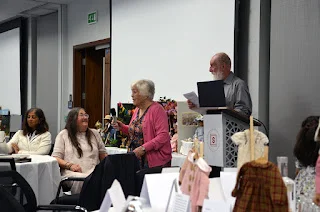
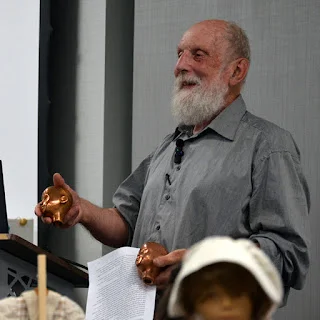
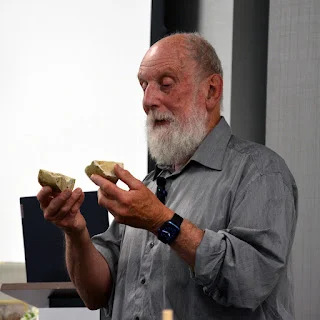
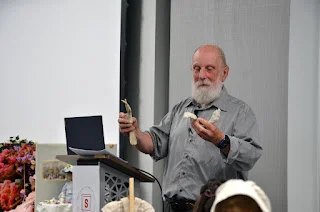
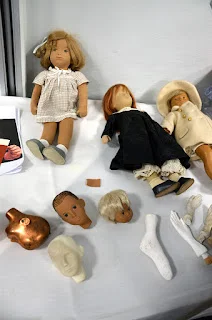
The programme listed the morning as “activities,” which took the form of displays and talks arranged around breakfast time. Frank Triggs, whose website is woodforms.co.uk, spoke about the sculptural work involved in making Sasha dolls. He brought moulds and discussed the lost wax technique, offering collectors a rare chance to consider the production process through the tools and examples on display.
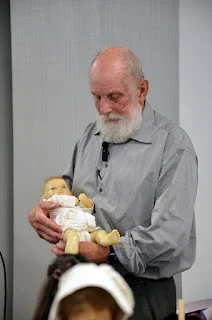
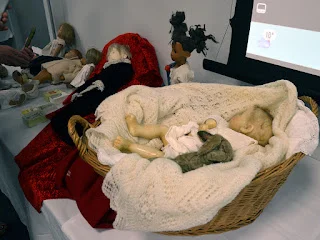
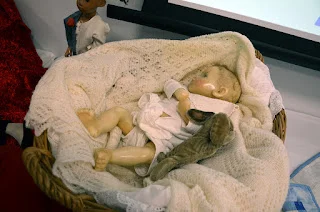
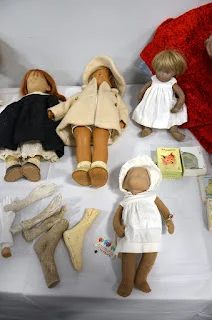
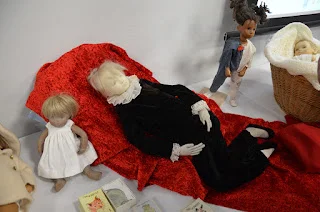
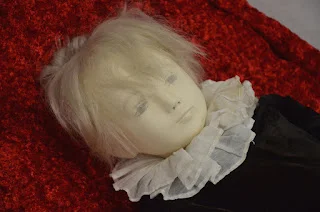
One detail he explained was the making of the elongated white-faced hands and feet used for Pierrot dolls. Those distinctive forms make the Pierrot easy to recognize, and seeing the casts alongside the dolls linked the finished pieces to the practical work behind their shape. Frank also cradled baby Amelie, described at the festival as very rare and belonging to Diane D. The display placed her among course and Studio dolls, Sasha moulds, a Pierrot boy and other examples.
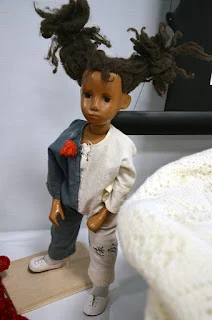
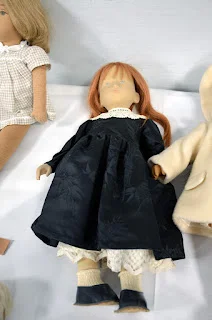
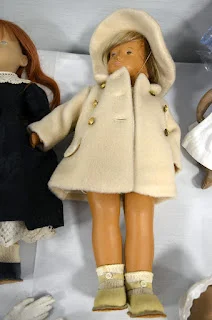
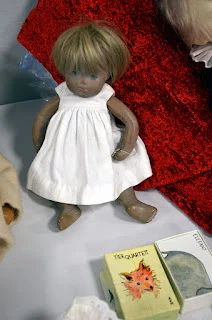
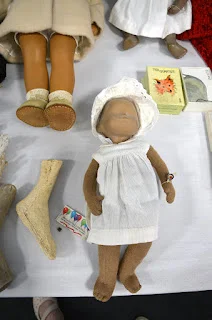
The accompanying photographs also record head moulds, casting moulds, a close view of a Sasha Pierrot doll, and a Studio baby without eye paint. Other pieces included a Studio baby, a pale coat Studio doll belonging to Anna, and Frank and Anna’s son’s much-played-with Sasha doll, “Dirt.” These examples make the morning’s display particularly useful as a visual record: it brought process, variation and personal history into one room.
Anna Doggart on Sasha’s influence
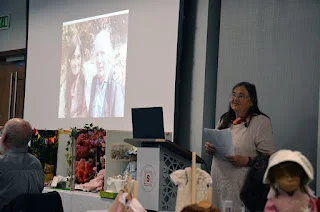
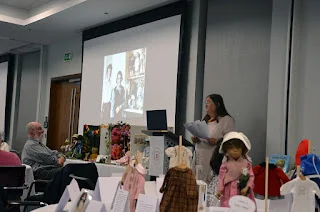
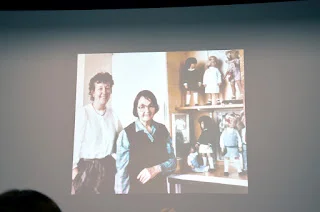
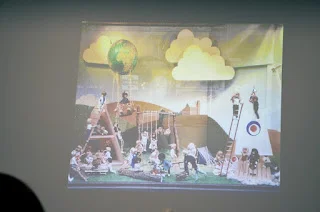
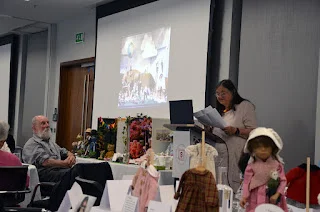
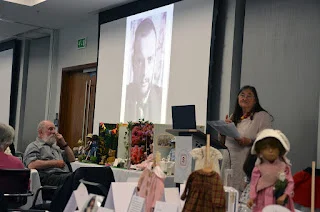
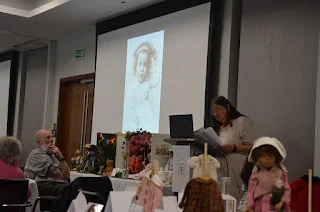
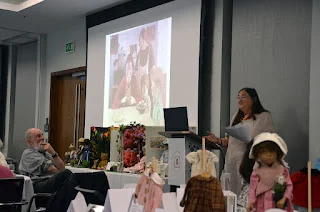
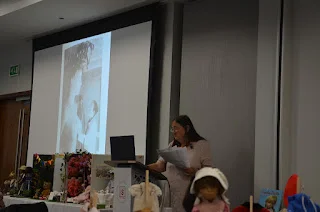
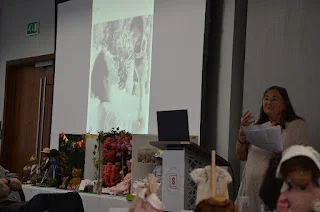
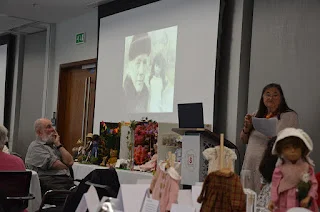
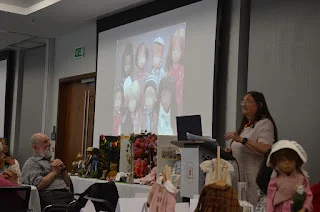
Anna Doggart spoke about the part Sasha played in her teenage years and the lasting bond between Sasha and the Doggart family. Her presentation included photographs of herself with Sasha M, and references to Sara D and Brenda Walton. Images of promotional scenes created by Sara and material about promoting Sasha helped place the dolls within a wider story of their presentation and reception.
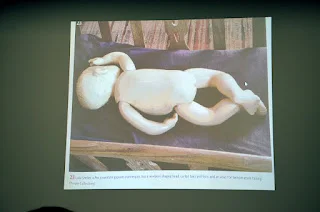
The talk also connected Sasha’s work to artistic influences, including Paul Klee, and followed her life across different kinds of making. The display captions identify Sasha as a very young child, show a painting by Ernst M of Sasha making toys among her children, and refer to large models she made. They also show a Pro Juventute baby made while Sasha was a midwife. Taken together, these objects and images underline how a doll collection can open onto an artist’s biography and the people around her.
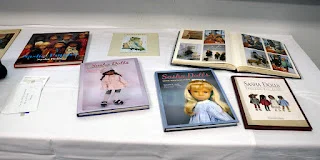
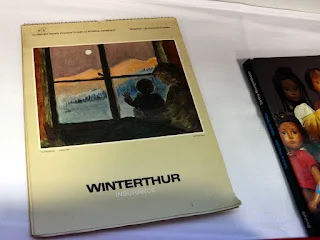
Books about Sasha dolls formed part of the display, alongside a Winterthur book. The dolls ranged from Studio examples to babies and Pierrot figures, including baby Amelie. A photograph showed Anna with Sasha holding a Trendon party girl doll; another showed Anna discussing studio dolls and Sasha’s influence on the humanity expressed in the figures. For collectors, the range offered a chance to look across forms and contexts while hearing the family history attached to them.
A small act of care for Ella
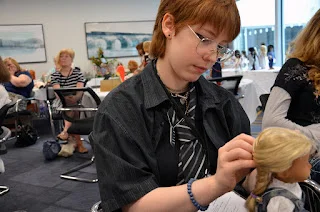
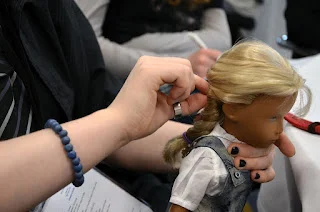
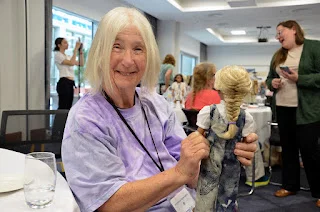
The morning also made room for a practical moment between collectors. The writer’s daughter re-plaited the fishtail braid in Jocelyn’s doll’s hair. It was the same doll whose hair she had braided at a Sasha Celebration Weekend in 2018, as recorded in that earlier festival account. Jocelyn was pleased with the result and said Ella could now wear her festival souvenir dress.
That exchange neatly captured the day’s mix of close observation and shared enthusiasm. The competition entries celebrated personal ideas in dress and styling; Frank’s talk made the making process tangible; and Anna’s presentation showed how memories and family connections can become part of a collection’s meaning. The Saturday programme’s next instalment was set to focus on the special displays from that morning.