1990 Target Dodgers Set: 1,095 Cards, Six Giveaways and a Checklist of Mysteries
- Project
- LEGO & Building Sets
- Drawn by
- jasoncards
- Issued
- Sheet
- A-204
The 1990 Target Dodgers set put 1,095 cards into fans’ hands across six games, while its numbering quirks reveal clues about the players left out.
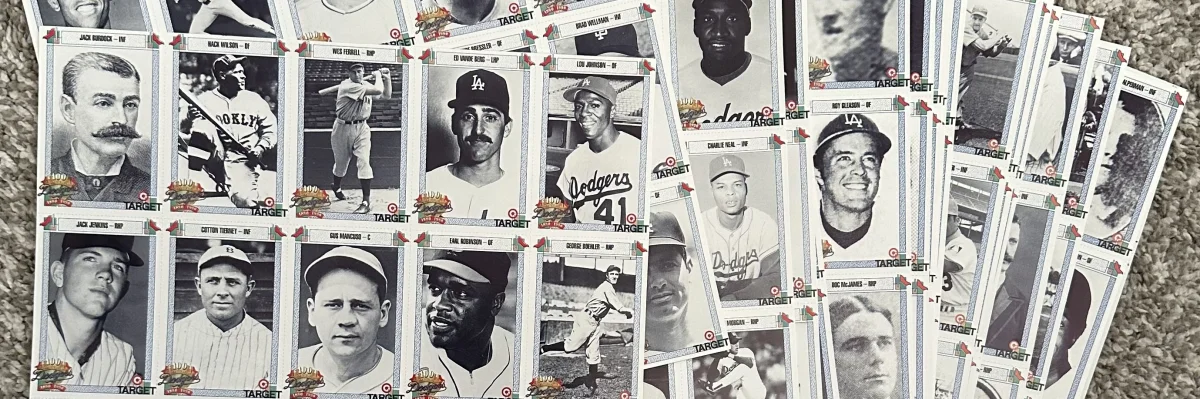
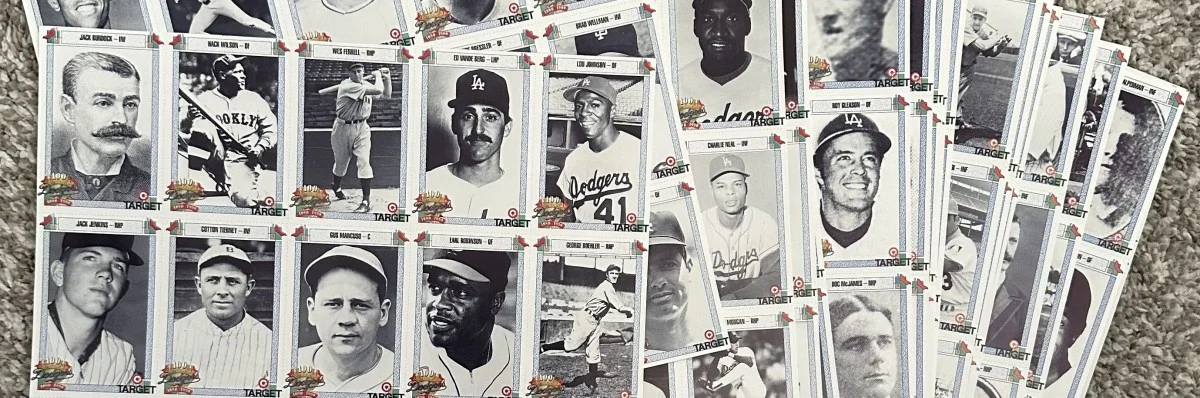

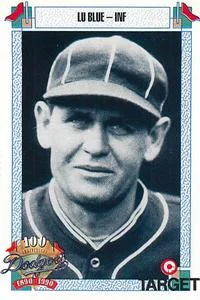
The 1990 Target Dodgers set tried to capture a century of franchise history in one enormous release: 1,095 cards covering players and managers from 1890 through 1989. Its scale is impressive on its own. The way the cards reached fans, the gaps in the checklist and the unusual split between familiar names and obscure subjects make the set a particularly rich one to investigate.
The cards were free to fans attending six Dodgers home games, thanks to Target’s sponsorship. The author’s later research, updated with help from reader Bruce Hendrick and a completed map of players to giveaway dates, adds corrections to the original account and helps explain how this ambitious set came together.
Six games, six card packets
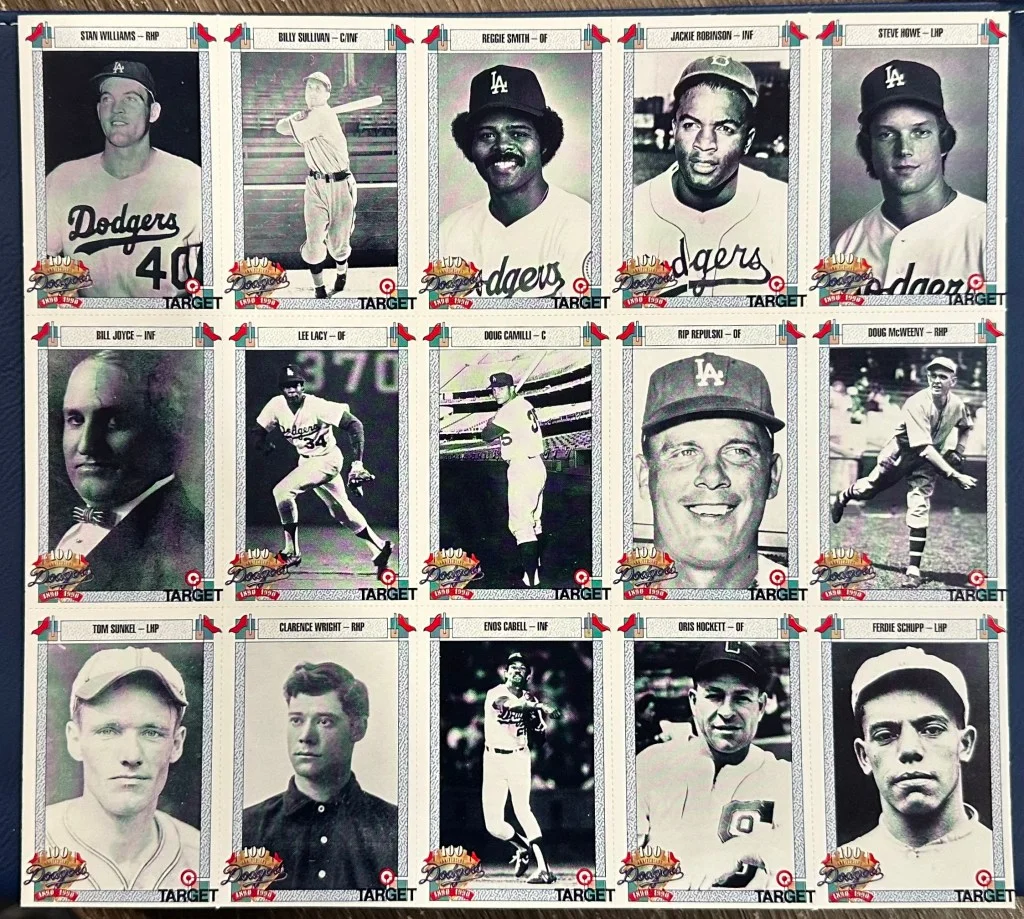
Each of the six giveaway dates came with a different partial set. Fans at a given game received identical packets, distributed as uncut sheets measuring 10 by 9 inches, with 15 cards on each sheet. That made the giveaway practical at the stadium, though it meant collecting the full set required attending multiple dates or finding cards elsewhere.
The schedule listed these distributions:
- April 20 vs. Astros: 240 cards
- May 1 vs. Pirates: 150 cards
- June 5 vs. Braves: 150 cards
- July 5 vs. Pirates: 150 cards
- August 21 vs. Phillies: 150 cards
- September 5 vs. Braves: 255 cards
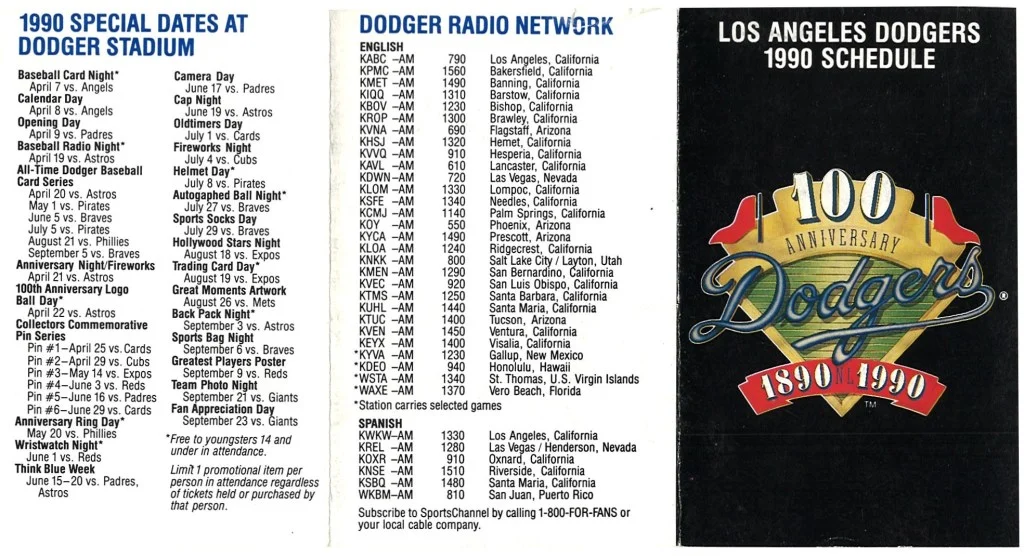
The May 1 packet, for example, included 10 sheets. One featured Jackie Robinson. The Dodgers’ pocket schedule is useful evidence here: it showed the July 5 date before an advertisement later appeared to leave it out.
Big numbers, imperfect advertising
An advertisement in the Los Angeles Times on April 18 called the promotion the “Biggest Baseball Card Giveaway Ever!” The slogan may have had a strong numerical case. An estimate based on attendance figures and the card totals for each date puts the distribution at 38,173,110 cards across all six games. The source describes that as a likely record, while the estimate itself depends on the promotion’s claim that every fan in attendance received cards.
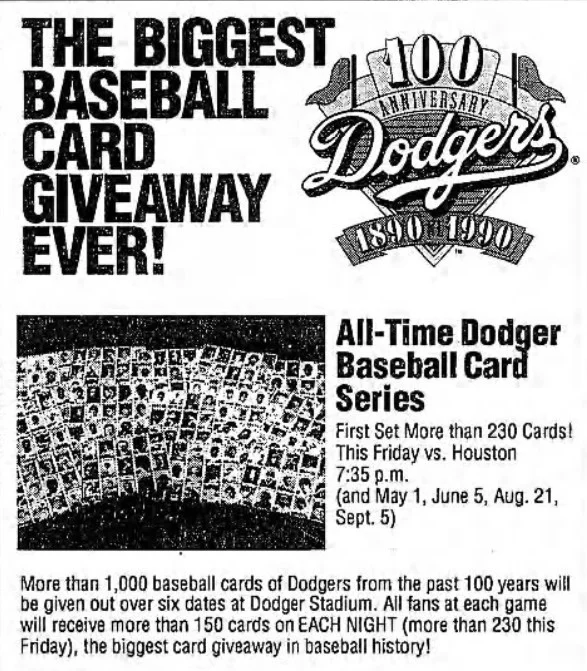
The April advertisement has a few discrepancies that are revealing in their own small way. It doesn’t list July 5, even though the earlier pocket schedule does, and the ad itself refers to six dates. It describes the first packet as having “more than 230 cards,” rather than giving the precise total of 240. It also promises “more than 150 cards” each night, although four of the dates offered exactly 150.

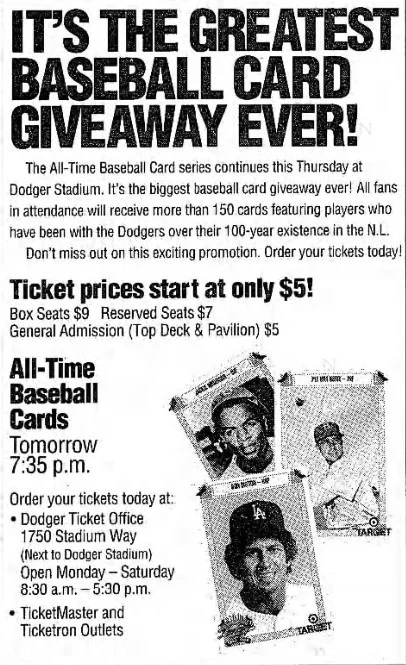
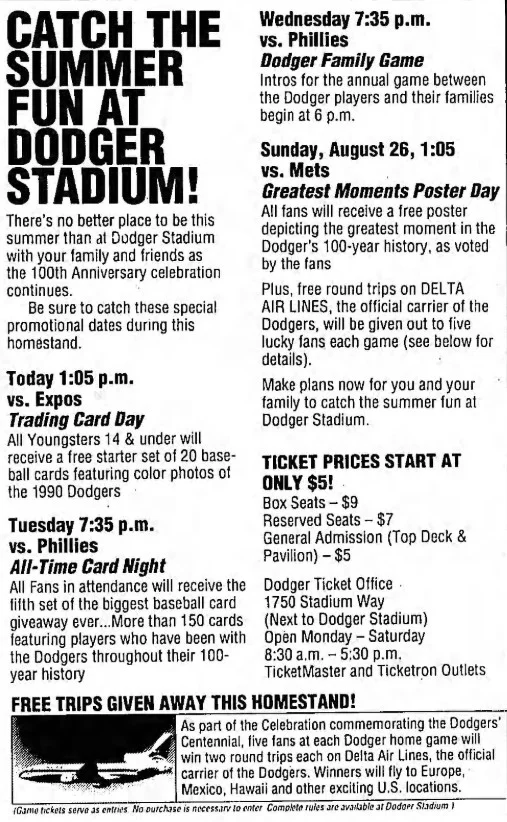
A later advertisement ahead of the July 5 game pictured cards of Jackie Robinson, Pee Wee Reese and Don Sutton. It kept the “more than 150 cards” wording. A final “All-Time Card Night” ad preceded the August 21 matchup with Philadelphia.
Numbering that jumps around
The giveaway packets don’t follow the set’s card numbers in a simple sequence. Sheet and packet numbering skip around, so players far apart on the checklist could be distributed at the same game. Moe Berg, card #48, and Hack Wilson, card #866, both appeared in the September 5 giveaway. Individual sheets could also combine widely separated numbers.

That distribution pattern is distinct from the checklist’s broader structure. The first large run proceeds alphabetically from card #1, Bert Abbey, through card #887, Don Zimmer. After that, the numbering resumes in three smaller alphabetical groups: #888 (Morrie Aderholt) through #1101 (Albert Zachary); #1102 (Lefty Davis) through #1104 (Darby O’Brien); and #1105, Sheldon Lejeune.
The author calls cards #1–887 the “Low Numbers” and the later groups the “High Numbers.” Giveaways at Games 1, 2, 4 and 5 contained only Low Numbers. The numbering map, available in the linked checklist spreadsheet, helps show how cards were allocated across the dates.
Checklist gaps and likely omissions
The checklist has two cards numbered 107 and two numbered 677. It also skips 12 numbers entirely: 408, 458, 463, 792, 902, 907, 969, 996, 1031, 1054, 1061 and 1098. Since most of the checklist is alphabetized, several gaps point to likely intended subjects.
- #408 is likely Pete Kilduff, a Dodger from 1919–21, between John Kennedy and Newt Kimball.
- #458 appears to fit Hall of Famer Ernie Lombardi, who played for the Dodgers in 1931.
- #463 likely belongs to Con Lucid, who played for Brooklyn in 1894 and 1895.
- #792 may have been intended for Dick Teed, a 1953 Dodger.
- #902 has several possible candidates: Clarence Blethen, Frank Bonner, Bob Borkowski, Gibby Brack or 1948 manager Ray Blades.
- #907 has no obvious missing name in its alphabetical position. The author suggests one of the two cards numbered 107—Leo Callahan or Gilly Campbell—may have been meant for #907.
- #969 likely fits Bert Hamric, who played for the 1955 Dodgers.
- #996 likely belongs to Jimmy Jordan, a Dodger from 1933–36.
- #1031 could be John McMakin or Frank McManus.
- #1054 likely fits Dick Robertson, who played for Brooklyn in 1918.
- #1061 may have been intended for Doc Scanlan, though Al Scheer and Dutch Shliebner are also candidates.
- #1098 could belong to Frank Wurm or Ad Yale.
These are reasoned identifications, not confirmed corrections to the checklist. The source can’t establish why the subjects were dropped. Missing photographs, permissions or simple production errors are suggested possibilities. A card of Bud Clancy, pictured with the White Sox, shows that subjects didn’t need to appear in a Dodgers uniform. Hendrick’s research also indicates that the photos came from the Hall of Fame, which sometimes had fewer images of a player in a Dodgers uniform than the team’s own files.

How close did the set get?
Research using Stathead and Baseball-Reference identified 1,222 eligible players and managers for the set’s 1890–1989 span. At first glance, the 1,095-card checklist represents 89.6% of that group. But one card needs to be removed from the count: card #997 identifies Frank Kane as a 1915 Brooklyn Dodger, though Kane played that season with the Brooklyn Tip Tops of the Federal League. On that basis, the corrected tally is 1,094 of 1,222, or 89.5%.

The 128 missing subjects range from Hub Collins in 1890 to Mike Huff in 1989. The omissions aren’t evenly spread across the decades: they’re most common in the early years, with another increase in the 1940s. The author suggests that the wartime presence of short-term players may help explain that later cluster. For older and shorter-career players, a lack of suitable photographs is another possible factor.

Late additions and first cards
The distinct alphabetical runs suggest the checklist may have been built in stages. The Low Numbers contain nearly all the familiar Dodgers, while the High Numbers lean toward less familiar names. Those later subjects appear only in Sets 3 and 6, another clue that the cards may have been assembled in phases. The original article includes a comparison of players in the Low Numbers, High Numbers and omitted group.

One striking result: 117 of the 1,095 subjects appeared on their first baseball card, or 10.7%. The difference between the two checklist sections is sharp. First-card subjects make up 38 of 885 Low Numbers, about 4.3%, and 79 of 210 High Numbers, or 37.6%.
Many of these first-card subjects are obscure players such as Nick Polly, Hughie Hearne and Ty Tyson. One stands out: Charlie Ebbets, a famous name in Brooklyn Dodgers history. Ebbets appeared on a handful of cards after 1990, while some of the other Target subjects may never have received another baseball card.

A set worth exploring card by card
The six packets each have their own notable names. Set 1 includes Walter Alston, Dusty Baker, Roy Campanella, Chuck Connors, Kirk Gibson, Sandy Koufax and Manny Mota. Set 2 features Don Drysdale, Jackie Robinson, Duke Snider, Don Sutton and Fernando Valenzuela. Set 3 brings together Charlie Ebbets, Lefty O’Doul and Zack Wheat; Set 4 includes Dick Allen, Eddie Murray and Maury Wills; Set 5 has Steve Garvey, Jim Gilliam, Orel Hershiser and Dave Stewart; and Set 6 includes Moe Berg, Frank Robinson and Hack Wilson.
For collectors chasing specific players, the spreadsheet can help identify which giveaway packet contained a card, and may make it easier to seek individual cards instead of the complete 1,095-card set. The checklist’s gaps, duplicate numbers and first-card subjects give the set a second layer of collecting interest: every card belongs to a distribution story, and some of the blank spaces still invite careful research.
| Rev | Description | Date |
|---|---|---|
| A | Issued for reading | |
| B | Viewed 614 times | Current |