LEGO Winter Village Collection 2026: All 18 Sets, From Toy Shop to Holiday House
- Project
- Stamps & Postal History
- Drawn by
- Brickman
- Issued
- Sheet
- A-30
LEGO Icons 11387 Holiday House joins the Winter Village lineup on October 1, 2026, bringing the collection to 18 sets spanning 2009–2026.
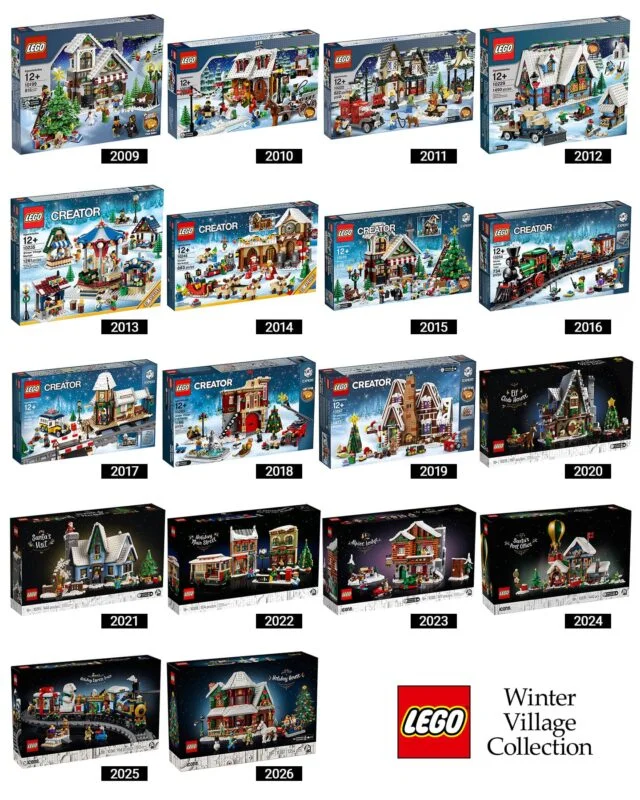
The Winter Village Collection reaches 18 sets with the arrival of LEGO Icons 11387 Holiday House on October 1, 2026. The new set contains 1,354 pieces and is priced at €109.99 in the source listing. That gives the newest entry a defined place in the series, though the listing alone doesn’t tell us how its design compares with earlier houses or how it will connect to a larger display. The year by year checklist remains useful: it lets collectors see the full run, spot gaps and decide which parts of the village matter most to them.

The complete set list
The series begins in 2009 with a toy shop and continues through a mix of village buildings, seasonal characters and transport. The entries below follow their release years, with each set number and name kept as listed. Reading down the list makes the collection’s scope clearer than looking at any one release in isolation: it moves among places to shop, gather, travel and celebrate.
- 10199 Winter Village Toy Shop (2009)
- 10216 Winter Village Bakery (2010)
- 10222 Winter Village Post Office (2011)
- 10229 Winter Village Cottage (2012)
- 10235 Winter Village Market (2013)
- 10245 Santa’s Workshop (2014)
- 10249 Winter Toy Shop (2015)
- 10254 Winter Holiday Train (2016)
- 10259 Winter Village Station (2017)
- 10263 Winter Village Fire Station (2018)
- 10267 Gingerbread House (2019)
- 10275 Elf Club House (2020)
- 10293 Santa’s Visit (2021)
- 10308 Holiday Main Street (2022)
- 10325 Alpine Lodge (2023)
- 10339 Santa’s Post Office (2024)
- 10361 Holiday Express Train (2025)
- 11387 Holiday House (2026)
Even this simple chronology offers a useful first pass at the range. The early run establishes a village through everyday community buildings, then introduces a market and Santa’s Workshop. Later releases broaden the setting with transport and more imaginative seasonal locations. A checklist can’t convey build techniques, scale or display footprint, but it does show how the line’s subjects have accumulated over time.
A village built across 18 years
One appealing feature of this checklist is the way it shows the collection’s changing mix at a glance. Shops and community buildings anchor the early years: the Toy Shop, Bakery, Post Office and Cottage are followed by the Winter Village Market. Later entries bring in Santa-themed settings, a train, a station and a fire station, alongside more fanciful locations such as the Gingerbread House and Elf Club House. That sequence gives the line more than one visual register, from familiar town functions to overtly fantastical holiday scenes.
The distinction matters when collectors think about what makes a display feel coherent. A group of buildings can read as a town, while a train and station suggest movement through it; the seasonal and fantasy sets can shift the tone again. The names point to these broad roles, but they don’t establish how the models fit together in scale or layout. That’s a reason to treat the list as a planning aid, not a promise that every set will form one seamless scene.
That range gives collectors several ways to think about a display. Some may prefer to group sets by year and follow the series in release order. Others might arrange them as a small town, bringing together the market, street, station and transport sets. The list itself doesn’t prescribe a layout, and the appeal is in choosing which buildings and vehicles best suit the space and story a collector wants to create. If you're working in this space, the useful question is often practical: which pieces can you actually show together, and which are better kept as separate seasonal scenes?
The names also make the annual progression easy to track. From 2021 onward, Santa’s Visit, Holiday Main Street, Alpine Lodge, Santa’s Post Office and Holiday Express Train provide a clear sequence of distinct themes. Holiday House now takes the 2026 place in that run. The article identifies its piece count, price and October 1 release date, while the accompanying links offer a reference point for the other sets. Here's the thing: those details establish what the listing says, but they don’t answer questions about the build, contents or how the house might relate to earlier releases.
What to check in a collection
For anyone comparing their shelves with the full lineup, set number and year are the most dependable starting points. The Toy Shop names appear twice in the list, for 2009 and 2015, but the set numbers distinguish 10199 Winter Village Toy Shop from 10249 Winter Toy Shop. That small distinction is easy to lose in casual notes, especially when a collector remembers a model by its general subject rather than its exact title. The number is the cleaner identifier.
A collection assembled over many years can include sets acquired at different times and in different states. A simple checklist can note which references are present and whether each is complete, built or stored for later display. For boxed sets, keeping the box and instructions with the matching set can make future sorting easier. Those are practical collection habits rather than claims about any particular set’s condition or availability; the source gives no grading details or current resale information. And this is the part most people overlook: a list of set names helps with identification, but it can’t confirm that loose pieces, instructions or accessories are all present.
For a long-running series, a checklist also prevents the display from becoming the only record. Models may be packed away after the season, split between storage and shelves, or rebuilt at different times; a written inventory preserves the distinction between owning a set and having it currently displayed. Keep the notes simple and tied to the set number. A useful record, not a catalog of every detail.
What Holiday House adds to the record
Holiday House is the newest point in the chronology, but the 18 entries leave plenty of room for personal favorites. One collector may be drawn to the early village shops, another to the trains and station, and another to the more imaginative houses and seasonal settings. The numbers here are underwhelming as a basis for judging the model: piece count and listed price say something about the entry, but they don’t describe the building experience or the finished display. That’s why the new set’s significance, for now, is its place in the sequence.
The useful takeaway is a precise, year by year reference: 18 named sets from 2009 through 2026, with 11387 Holiday House adding the latest chapter on October 1. Its arrival gives collectors a clear update to the checklist, while leaving the character of the set itself to be assessed from details beyond the listing. For anyone maintaining a collection, that’s a modest but practical change: one more number and name to track, and another choice about how the village should look.

| Rev | Description | Date |
|---|---|---|
| A | Issued for reading | |
| B | Viewed 342 times | Current |