Ideal Baby Dreams Velvet Skin Doll: 1975 First-Version Find
- Project
- Toys & Action Figures
- Drawn by
- [email protected] (Tam)
- Issued
- Sheet
- A-48
A yard-sale find brings another 1975 Ideal Baby Dreams Velvet Skin Doll into view, with flocking in good shape and a few clear condition notes.

A first-version Baby Dreams
The flocking is the detail that makes this 1975 Ideal Baby Dreams stand out, and this example has held up well. It’s the first version of the doll, with flocked face, arms and legs. For a collector, that surface treatment is more than a decorative feature: it’s one of the clearest ways to distinguish the two versions described here. The seller found her at a yard sale this summer after repeated inquiries from readers who’d missed the seller’s previous Baby Dreams doll. She’s now offered for $40 plus shipping.
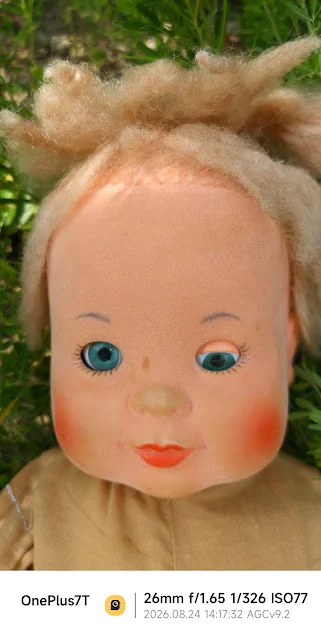
For collectors comparing examples, the two versions are worth distinguishing. The first has flocking on the face, arms and legs; the second has flocking on the face and arms only. This doll is the first type. That difference gives you a useful starting point when identifying one, though it doesn’t answer every condition question. The visible wear, completeness and function of the individual doll still matter. The flocking on this example is described as being in pretty good condition, a positive feature that’s easier to assess alongside the seller’s close-up photographs.
There’s a practical reason to keep the version description precise. When two dolls share a name and much of their appearance, a small construction or finish difference can carry more weight in a collector’s comparison than a general label does. Here, the flocking pattern is the evidence offered for the identification. The listing doesn’t claim more than that, and that restraint is useful.


Flocking and body condition
The flocking is described as being in pretty good condition, a welcome feature for a doll whose surface can sometimes look considerably rougher. That description is specific to this example; it doesn’t imply that every Baby Dreams has aged the same way. With a flocked surface, overall appearance can be central to how a doll reads in a collection, so close photographs are useful evidence for prospective buyers. They can show where the finish looks even and where handling or age may have left visible changes.
The seller’s assessment is still an assessment, not a condition grade. “Pretty good” leaves room for different standards, and collectors may weigh wear differently depending on whether they display dolls, handle them, or focus on finding a particular version. The pictures offer a closer look for anyone making that judgment. This is more significant than it looks: the flocking both identifies the first version and helps define the condition of this particular example.
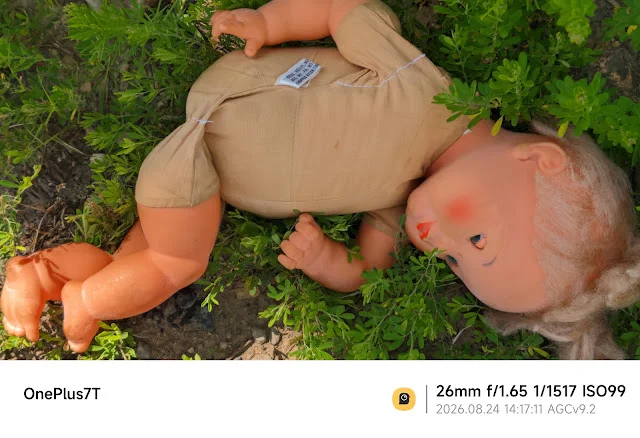


Both versions have stuffed cloth bodies, which give the dolls their soft, cuddly feel. Their tan fabric can appear dirty at first glance, but the seller explains that this unusual tan shade is how the bodies came. That distinction matters when assessing appearance: color alone shouldn’t be mistaken for soiling. A photograph can help show the fabric, but the seller’s explanation gives buyers useful context they might not get from an image alone.
The shoulder seam is a separate condition point. One shoulder has a popped seam, and the seller says it can be repaired with hidden stitches before shipping if the buyer requests it. That’s a concrete option, but it’s also a choice about how the doll will arrive: collectors who prefer to assess repairs themselves may want to consider the seam as shown, while others may welcome the seller’s offer. The listing identifies the issue plainly.

 |
| The seller reports a popped seam on one shoulder and can repair it with hidden stitches before shipping if the buyer asks. |
Eyes, hair and clothing
One sleep eye sometimes sticks, though it does work. The seller describes the eyes as clear and bright. That combination makes the eye mechanism worth checking alongside the doll’s appearance: it functions, but not consistently. A working mechanism with an occasional sticking issue is a more exact description than simply calling the eyes functional, and it gives collectors a better sense of the doll’s present state.
The hair also needs attention. The seller suggests conditioning it a little and combing it, so its current state is part of the listing rather than a claim that it’s already restored. Any grooming is a separate decision for the next owner; the available information doesn’t establish what treatment has been tried or how the hair will respond. If you're working in this space, that distinction between a suggested task and completed restoration is worth keeping clear.


The doll doesn’t come with her original nightie. For a collector, that’s a useful distinction when considering completeness: the listing identifies the missing garment plainly, while the doll’s flocking, cloth body, eyes and hair each have their own noted condition. Completeness isn’t one simple yes-or-no category here. The doll has identifiable version details and several described features, alongside a missing piece of clothing and maintenance needs.
The photographs accompany those details and help prospective buyers judge the example for themselves. They’re most useful when read together with the seller’s descriptions: images can show visible condition, while the text clarifies the tan body fabric, the intermittent sleep eye and the shoulder seam. Neither replaces the other. And yet, the listing gives enough specific points for a reader to know what questions remain before deciding whether this doll fits a collection.
What this example offers collectors
Ideal made Baby Dreams in 1975, and this yard-sale find gives collectors another chance to see the first flocking variation. The asking price is $40 plus shipping. Anyone interested can leave contact information in a comment; the seller says it won’t be published and will follow up directly. The article doesn’t provide a broader price comparison, so the figure is best read as this seller’s asking price for this particular doll.
For collectors, the significance is in the combination of a clearly identified first version and a condition account that includes both strengths and faults. The flocking is described as holding up well, while the sleep eye can stick, the hair could use grooming, one shoulder seam has opened, and the original nightie is absent. Not a pristine, complete example. That mix gives readers a grounded picture of the doll on offer, rather than leaving them to infer condition from a single attractive detail.
What this means for you is straightforward: compare the flocking pattern first, then weigh the surface and the remaining condition points against your own collecting priorities. The seller’s willingness to repair the seam if asked may matter, but it doesn’t erase the need to consider the doll as described. The numbers here are underwhelming as a basis for any wider market conclusion; this is one listing, at one asking price. As a specific example of the first Baby Dreams version, though, it offers a useful reference for collectors watching for the three-area flocking pattern.
| Rev | Description | Date |
|---|---|---|
| A | Issued for reading | |
| B | Viewed 392 times | Current |